
In the high-stakes world of professional tennis, where every serve and sprint can propel a player to glory or sideline them indefinitely, Holger Rune’s journey has been a rollercoaster of triumphs and setbacks. The 22-year-old Danish sensation, once hailed as the next big thing with his explosive baseline game and unyielding competitiveness, now finds himself grappling with one of the sport’s most dreaded afflictions: a ruptured Achilles tendon. What began as a promising end to his 2025 season has devolved into a prolonged battle for recovery, with Rune’s latest update casting a shadow of concern over his future on the court.
The Injury That Shattered a Season
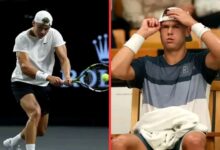
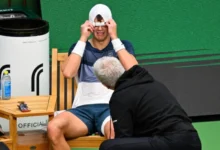
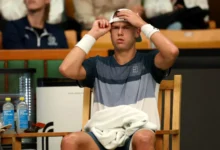
It was October 18, 2025, during the semifinals of the BNP Paribas Nordic Open in Stockholm—a tournament close to Rune’s heart as a homecoming of sorts for the Scandinavian star. Facing off against France’s Ugo Humbert, Rune had stormed through the first set 6-4, his powerful groundstrokes and relentless retrieval keeping the crowd on edge. But in the early games of the second set, with the score locked at 2-2, disaster struck. A sudden twist during a routine point sent Rune crumpling to the court in agony, clutching his left Achilles. Tears streamed down his face as medical staff rushed to his side, and he was ultimately forced to retire from the match.
The diagnosis was as brutal as the pain: a complete rupture of the proximal Achilles tendon, the thick band of tissue connecting calf muscles to the heel bone. This isn’t just any injury—it’s a career-altering blow that has felled giants before. Rune, who had already endured a season of physical inconsistencies and cramping issues, now faced the prospect of surgery and an uncertain rehabilitation timeline. In an emotional Instagram post the following day, he broke the news to fans: “My Achilles is full broken on the proximal part meaning I need operation already next week and from here rehabilitation. Thank you for all your support now and always. Without you nothing would be the same. See you as soon as possible.”
The surgery, performed swiftly in the ensuing days, went “really well,” according to Rune’s immediate post-operative update. But the optimism was tempered by the harsh realities of Achilles recovery. Experts estimate a timeline of nine to twelve months for full return to competitive play, potentially sidelining the world No. 15 through the early majors of 2026, including the Australian Open and Roland Garros. For a player who ended 2025 with a respectable 36-22 record—capped by a breakthrough ATP 500 title in Barcelona over Carlos Alcaraz—this hiatus feels like a cruel interruption to his ascent.
A Season of Promise Cut Short
Rune’s 2025 campaign had all the makings of a breakout year. After a frustrating 2024 marked by coaching changes and inconsistent results, he regrouped under the guidance of new fitness coach Marco Panichi, a veteran who had previously shaped the ironclad physiques of Novak Djokovic and Jannik Sinner. Panichi joined the team in August, focusing on load management and movement quality to address Rune’s notorious tendency to “give his all” at the expense of sustainability. “Holger always tends to give his all, but when you need to recover, you need discipline: progression, controlled intensity, respect for the times,” Panichi explained in a recent interview.
The fruits of this partnership were evident. Rune silenced doubters with a runner-up finish at Indian Wells, showcasing his mental fortitude in grueling five-setters, and then stunned the tennis world in Barcelona. On the red clay of the Real Club de Tenis Barcelona, he dismantled Alcaraz in the final, 7-6, 6-2, securing his fifth ATP title and first at the 500 level. It was a statement win, proving Rune could hang with the sport’s elite in conditions that favored endurance and precision.
Yet, whispers of physical fragility lingered. Panichi later revealed that Rune’s body had been “sending signals” even before the rupture—subtle warnings of overexertion amid a packed schedule. Rune’s mother, Aneke Rune, even pointed fingers at the ATP’s grueling calendar, a sentiment echoed by many players weary of the tour’s relentless pace. The Stockholm injury, then, wasn’t just bad luck; it was the culmination of a body pushed to its limits.
The Road to Recovery: Progress Marred by Peril
Fast-forward to early December 2025, and Rune’s rehabilitation has become a public spectacle, chronicled through social media videos that blend determination with vulnerability. Five weeks post-surgery, he shared a TikTok clip of himself lightly rallying in a protective boot, captioning it: “Ending the day with a good game of tennis. Phase 2 of rehab is going well, 5 weeks post-op, 2-3 more weeks in the boot. #qatar #kalifatennis #achillesrecovery #comebackloading.” The footage, showing tentative footwork and a familiar backhand whip, drew cheers from fans eager for signs of the old Rune.
But beneath the surface of these updates lies a struggling recovery that’s fueling widespread worry. By mid-December, Rune posted a more sobering video: him hobbling on crutches, his left foot encased in a bulky boot, struggling to bear weight. The clip, shared amid a flurry of rehab exercises, highlighted the raw, unglamorous grind of tendon healing—slow, painful, and fraught with the risk of re-injury. “It’s gonna be a while before I can step on court again,” he admitted candidly. “It’s tough.”
Rune’s fitness team, led by Panichi, has implemented a meticulous plan emphasizing gradual progression. Early phases focused on restoring order to his training: controlled mobility drills, blood flow enhancement, and preventing atrophy in the rest of his body. “He’s young, he reacts well, and he’s a quick learner,” Panichi noted, praising Rune’s fluid movement returning in limited sessions. Yet, the coach stressed the mental discipline required, especially for a player wired for intensity. Rune himself has echoed this, replying to a fan’s concern with resolve: “Yes Achilles is tough because it’s tendons not muscles. It takes time, but I will be back.”
Fan Fears and the Perils of Pushing Too Hard
The tennis community has rallied around Rune, but his proactive approach has sparked division. Social media buzzed after a December 6 post where Rune defended his active rehab: “You can’t stay in bed because you are scared of falling. You need to push within the limits of what you can do and improve and increase whenever allowed. You most certainly can help the healing process by being active within certain frames of each step of the recovery.” While many praised his warrior spirit, others sounded alarms. One fan invoked Kim Clijsters’ recent Achilles woes, urging: “Could you maybe call Kim Clijsters and she’ll tell you not to be in such a hurry? One slip, you’re back in the OR.” Headlines amplified the tension: “Someone lock him up for his own good” versus “This is good for him actually”—a microcosm of the debate over aggressive versus conservative recovery.
Warnings from peers like Daria Saville, who endured her own Achilles nightmare, underscore the stakes. Saville, back on tour after a similar rupture, cautioned Rune against complacency: “Your body is healing. You can’t force it to go faster.” Modern sports medicine supports measured activity to aid circulation and prevent stiffness, but for Achilles injuries, the margin for error is razor-thin. A premature push could mean months more sidelined—or worse, a chronic weakness that haunts his game.
Rune’s protected ranking offers a safety net, preserving his top-20 status for up to nine months post-injury. But at 22, with the Alcaraz-Sinner duo dominating, time is a luxury he can’t afford to squander. Fans and analysts alike wonder: Will this forge a more resilient Rune, or will it dim the fire that made him special?
A Comeback on the Horizon?
As December 11, 2025, dawns, Holger Rune remains a study in contrasts—immobile yet unbreakable, sidelined yet scheming his return. His latest update, shared via X amid crutches and cautious steps, reassures that “phase 2 is going well,” but the boot’s shadow looms large. The tennis world watches with bated breath, knowing this injury could redefine his career. Rune’s message is clear: He’s not just healing a tendon; he’s rebuilding a champion.
For now, the Dane’s mantra holds: Push the limits, but respect the process. If anyone can turn setback into supremacy, it’s the kid who once stared down Djokovic as a teenager. Holger Rune’s story isn’t over—it’s just on pause. And when the boot comes off, expect fireworks.