
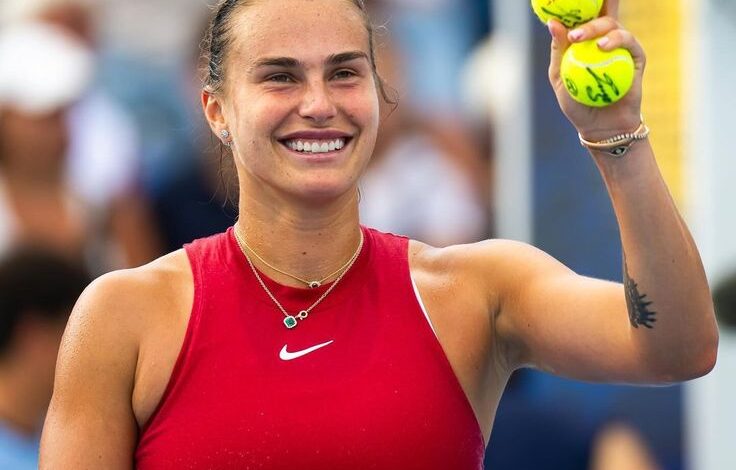
World No. 1 tennis player Aryna Sabalenka has ignited a fierce debate in the sports world after expressing her opposition to transgender women competing in women’s professional tennis. The Belarusian star, fresh off defending her US Open title in 2025, made the remarks during a high-profile interview ahead of her upcoming “Battle of the Sexes” exhibition match against Nick Kyrgios.
In the discussion, Sabalenka stated that while she has no personal issues with transgender individuals, she believes their participation creates an unfair advantage. “That’s a tricky question,” she said. “I have nothing against them, but I feel like they still have a huge advantage over women. I think it’s not fair on women to face basically biological men.” She elaborated further, emphasizing the lifelong dedication of female athletes: “A woman may have worked her whole life to reach her limits, and then she has to face a man who is biologically much stronger.”


Sabalenka’s co-interviewee, Australian player Nick Kyrgios, voiced agreement, saying she “hit the nail on the head.” The comments align with longstanding views held by tennis legend Martina Navratilova, who has been a vocal critic of transgender inclusion in women’s sports, arguing it undermines fairness.
The Women’s Tennis Association (WTA) currently permits transgender women to compete under specific conditions, including maintaining testosterone levels below a certain threshold for an extended period. However, no transgender athletes have prominently competed at the elite level in professional tennis in recent years, making the issue more theoretical than practical in the sport.
Sabalenka’s statements quickly went viral, drawing sharp criticism from sections of the online community, particularly those advocating for LGBTQ+ rights. Many accused her of transphobia, with some labeling her words as “harmful propaganda” that contributes to the vilification of transgender individuals. Critics pointed out the irony of her comments being made alongside Kyrgios and in a setting promoting a mixed-gender exhibition, questioning her representation of women’s tennis. Others argued that the focus on transgender athletes distracts from broader issues, noting the absence of such competitors dominating the tour.
On the other side, supporters praised Sabalenka for speaking candidly about biological differences in sport. They argue that male puberty confers lasting physical advantages, such as greater muscle mass and strength, that hormone therapy cannot fully mitigate. This perspective echoes debates in other sports where transgender participation has been more visible.
The interview host defended Sabalenka against the backlash, insisting her concerns were valid and centered on protecting women’s rights in competition rather than personal prejudice.
As the tennis world heads into the off-season, Sabalenka’s remarks have reignited a polarized discussion on fairness, inclusion, and biology in women’s sports. With no immediate policy changes on the horizon from the WTA, the controversy underscores the ongoing challenges governing bodies face in balancing equity and opportunity.
Sabalenka, known for her powerful game and unfiltered personality, has not publicly responded to the criticism as of now. Her upcoming exhibition match promises to keep her in the spotlight, but this episode highlights how athletes’ off-court opinions can overshadow their on-court achievements