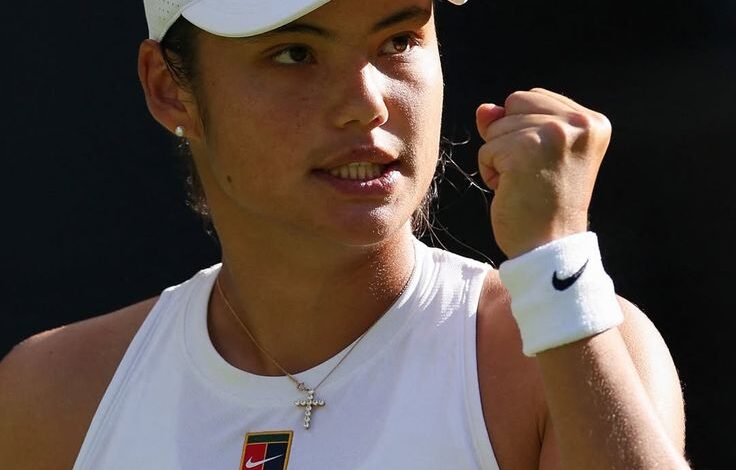
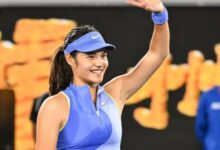
In the intense glare of professional tennis, where every decision is dissected and every change fuels endless debate, Emma Raducanu continues to chart her own course with unapologetic determination. The 2021 US Open champion, now 23, has faced relentless scrutiny over her coaching carousel — a pattern that has seen her work with nearly a dozen coaches or consultants since her stunning breakthrough in New York. Yet in March 2026, speaking ahead of the Indian Wells Open, Raducanu delivered a firm message to her critics: “I’m not going to let anyone dictate how I should feel or how I should play.”
Her latest split came after the 2026 Australian Open, when she parted ways with experienced Spanish coach Francisco Roig after just six months together. The partnership ended amid disagreements over changes to her playing style, particularly adjustments to her forehand that Raducanu felt had taken her away from her natural game. Roig, who had previously worked with stars like Rafael Nadal, represented another high-profile attempt to stabilise her team. But the experiment proved short-lived, marking yet another chapter in Raducanu’s well-documented coaching journey.
Critics have long pointed to the frequent changes as a potential barrier to sustained success. Since her fairytale major win at Flushing Meadows — achieved with minimal prior Tour experience and under temporary guidance — Raducanu has navigated a revolving door of mentors. Some partnerships lasted months, others longer, but consistency has remained elusive. Injuries, form dips, and the unique pressures of sudden fame have all played roles, yet the narrative often circles back to her team instability as the central issue.
In a candid interview at Indian Wells, Raducanu pushed back strongly against that narrative. She explained her desire to rediscover her instinctive, free-flowing style of tennis — the one that captivated the world in 2021. “I have had a lot of people telling me what to do, how to play, and it hasn’t necessarily fit,” she said. “So I want to come back to my natural way of playing. That takes time to relearn because that’s something that has been coached out of me a little bit.”
Rather than rushing into another full-time commitment, Raducanu opted for a more flexible approach. She has been working with LTA coach Alexis Canter, with whom she has enjoyed past success in events like Washington and Cluj. She also tapped into short-term support from Mark Petchey — a coach who previously helped her deliver some of her most consistent tennis in 2025 — on an informal basis. “Right now, it’s more about bringing my instincts back out, getting back in touch with myself,” she emphasised.
Raducanu made it clear she remains open to a long-term coach in the future, but only on her terms. Any new addition must respect her autonomy and avoid imposing a rigid framework that stifles her creativity on court. She acknowledged the inevitable spotlight any coach would face but expressed wariness about the external noise and scrutiny that comes with it. “I don’t necessarily want to have one coach in the role because anyone I bring in is straight away going to be scrutinised — even if it’s a trial.”
This stance reflects a maturing athlete who has learned hard lessons from the whirlwind years following her US Open triumph. The weight of expectations, physical setbacks, and constant analysis have forced Raducanu to prioritise self-trust and mental freedom. Her message carries a broader resonance: in a sport that rewards structure and repetition, she is fighting to preserve the joy and intuition that fuelled her greatest moment.
The British No. 1 has accepted that criticism will persist as long as she remains in the spotlight. “I’ve accepted that it’s going to keep happening,” she noted in related comments. Yet she also recognises the privilege behind the attention — it stems from her achievements and potential. By refusing to let outsiders shape her emotions or her game, Raducanu is reclaiming control of her career narrative.
As she competes in the sunshine swing of Indian Wells and beyond, the tennis world watches closely to see if this latest philosophy yields results. Early signs in 2025 showed promise during periods of relative stability, but consistency remains the ultimate test. Raducanu’s willingness to experiment, even amid the noise, highlights her resilience and refusal to conform to conventional expectations.
In an era where young stars are often urged to follow proven blueprints, Emma Raducanu is writing her own rules. Her defiant stand against coaching critics underscores a simple yet powerful truth: true progress sometimes requires stepping back from external voices to reconnect with one’s inner game. Whether this flexible, instinct-driven path leads to more deep runs in Slams or renewed ranking climbs, one thing is certain — Raducanu will pursue it on her own terms, dictating how she feels and how she plays.