
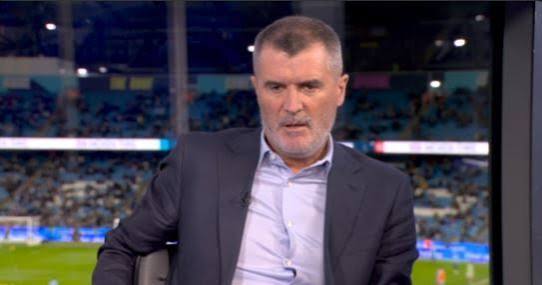
ROY KEANE’S BRUTAL MESSAGE TO CARRICK! UNITED NEEDS A RUTHLESS MANAGER WHO IS NOT AFRAID TO BENCH ITS BIGGEST STARS!
Roy Keane has reportedly delivered one of his most scathing assessments yet of Manchester United’s current predicament, insisting that Michael Carrick is too nice for the job and that the club desperately needs a ruthless figure capable of disciplining players and benching even the biggest stars without fear of the consequences.
Keane reportedly said: “I said it before, and I’ll say it again. Carrick is a beautiful coach, a good coach, a nice coach, a lovely coach. But Manchester United does not need a good coach, a nice coach, or a lovely coach. They need someone brutal!
“They need someone who is able to stand up to players who are undisciplined, unwilling to work, and unwilling to give everything for the badge. Carrick has the best playing style, but these players need a hard hand. They need someone who can put their biggest stars on the bench without fearing the consequences.
“If Carrick can change today, start calling out his players publicly, confront them, and take the bull by the horns, then Manchester United will move forward. I remember when…”
The reported comments cut to the heart of the debate currently raging around Old Trafford. United’s season has collapsed into a familiar cycle of poor results, internal tension and external criticism. Michael Carrick, still relatively early in his tenure, has faced growing questions about whether his measured, thoughtful approach is suited to a dressing room that appears to lack intensity and accountability. Keane’s alleged verdict frames that question in the starkest possible terms: niceness is not enough.
Throughout his own playing career and subsequent media work, Keane has consistently argued that elite environments demand confrontation, high standards and a willingness to make unpopular decisions. His reported description of Carrick as “beautiful,” “good,” “nice” and “lovely” is not intended as pure praise. It is a deliberate contrast with the qualities he believes the current United squad requires. In Keane’s alleged view, the players need a manager who will confront underperformance directly, publicly if necessary, and who will not hesitate to remove even the highest-paid or most high-profile names from the starting lineup.
The claim that certain players are “undisciplined, unwilling to work, and unwilling to give everything for the badge” is particularly damning. It suggests that the problems at United go beyond tactics or individual form and into the realm of mentality and professionalism. When a figure of Keane’s stature levels such accusations, they carry significant weight among supporters who have watched the side produce listless performances and fail to sustain intensity across matches.
Carrick’s coaching style has been widely praised for its clarity and emphasis on structured possession. Keane’s reported acknowledgement that the former midfielder “has the best playing style” concedes that the tactical foundation may be sound. The criticism focuses instead on the human element — the ability to impose will on a group of elite athletes who may not always share the same levels of hunger or accountability. In Keane’s alleged assessment, style without steel is insufficient at a club of United’s size and expectations.
The call for a manager who can “put their biggest stars on the bench without fearing the consequences” goes to the core of authority. At many clubs, high-profile players develop a form of protected status through reputation, commercial value or dressing-room influence. Challenging that status requires both courage and institutional support. Keane’s reported insistence that United need someone prepared to take that risk reflects his long-held belief that no individual should be bigger than the collective standards of the team.
The additional suggestion that Carrick could still succeed if he changes approach — by calling players out publicly, confronting them and “taking the bull by the horns” — offers a narrow path forward. It is not an outright dismissal of the current manager. Instead it is a challenge: adapt or the club will eventually require someone else. For a coach already under pressure from results, such public advice from a club legend intensifies the scrutiny on every subsequent selection and every post-match comment.
United’s recent performances have provided ample material for critics. A winless run, heavy or soft defeats, and a series of matches in which the side appeared to lack intensity have left supporters frustrated. When those displays are framed as the product of insufficient discipline rather than purely tactical shortcomings, the conversation shifts toward questions of leadership and culture. Keane’s reported intervention pushes that conversation firmly into the open.
The dressing-room implications are significant. Players who feel they are being characterised as unwilling to work will inevitably react, whether through improved effort or through further disconnection. A manager who begins to confront individuals more aggressively risks short-term disruption even if the long-term aim is higher standards. Carrick must decide whether to maintain his current methods or to adopt a more confrontational stance in response to the growing external pressure.
Supporters remain divided. Many will agree with Keane’s assessment that the squad requires firmer handling and that certain players have been allowed too much latitude. Others will argue that constant public criticism from former players only adds to an already toxic atmosphere and that Carrick should be given time to implement his ideas without the weight of legendary expectations. The reported comments will fuel both sides of that debate.
Keane’s own history at United lends particular force to his words. As captain under Sir Alex Ferguson he was the embodiment of the confrontational, high-standard culture that defined the club’s most successful years. When he speaks about the need for ruthlessness and the willingness to bench stars, he does so as someone who lived those principles. That personal authority makes his critique harder to dismiss as mere punditry.
The broader context of United’s season cannot be ignored. Multiple managers in the post-Ferguson era have struggled to impose lasting authority on the squad. Patterns of underperformance, dressing-room tension and eventual managerial change have repeated themselves. Keane’s reported analysis suggests the common thread is a lack of genuine ruthlessness at the top. Until that changes, he appears to believe, the cycle will continue.
Whether Michael Carrick responds by hardening his approach remains to be seen. Publicly calling out players is a high-risk strategy that can either galvanise a squad or deepen existing fractures. Benchings of major names carry similar risks and rewards. The reported challenge from Keane leaves little room for a middle path: either the current manager demonstrates the necessary steel, or the club will eventually look for someone who already possesses it.
For now the message stands as one of the clearest and most brutal assessments of United’s predicament offered by a figure of Keane’s stature. Nice is not enough. Good is not enough. Lovely is not enough. According to the reports, Manchester United need someone prepared to be brutal — someone who will confront the undisciplined, demand maximum effort, and bench the biggest stars without fear. The question hanging over Old Trafford is whether Michael Carrick can become that person, or whether the club will ultimately decide it needs to find him elsewhere.