
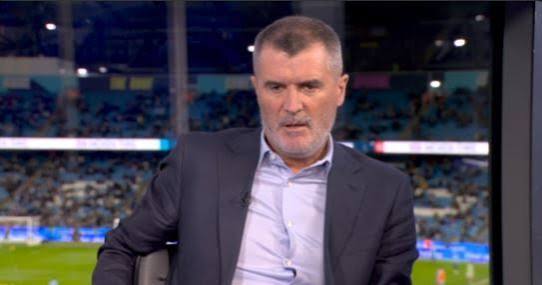
Roy Keane has exploded. The Manchester United legend has torn into Lisandro Martínez after the defender’s red card against Chelsea, delivering one of the most brutal public assessments of a current United player in years. Keane has held Martínez directly responsible for the team’s failure, branding the second yellow card stupid, unnecessary and costly.
The former captain did not hold back.
“Today was a disaster against Chelsea, and Lisandro Martínez was at the heart of it again. That red card was stupid and completely unnecessary. You’re already on a yellow card, playing in a massive game, and you still make that kind of decision? It cost the team. United need players who want to fight for this shirt, not players who keep making reckless decisions and putting the team under pressure. If he can’t control himself in these moments, then serious questions have to be asked about his future.”
Those words carry the full weight of Keane’s reputation. This is a man who demanded absolute standards as a player and has never softened that stance in retirement. When he calls a red card stupid and questions a senior professional’s future, the criticism cuts deeper than most.
The incident itself was straightforward and damaging. Martínez, already booked, committed the challenge that produced a second yellow and a penalty. The numerical disadvantage and the spot-kick changed the course of the match. Keane has refused to accept any excuses. In his eyes the decision was avoidable, the timing was disastrous, and the responsibility belongs entirely to the defender.
Keane’s central accusation is a failure of basic game management. A player on a yellow card in a high-stakes fixture must adjust. Continuing to dive into challenges with the same intensity is not bravery. It is recklessness. That distinction sits at the heart of Keane’s fury. He has seen too many matches decided by players who could not control their own impulses.
The phrase “at the heart of it again” is deliberate. Keane is pointing to a pattern. This is not being framed as a one-off mistake. It is being presented as another example of Martínez making the wrong decision at the wrong moment and leaving his team-mates to suffer the consequences. That framing turns a single red card into a broader indictment of reliability.
Manchester United cannot keep absorbing these self-inflicted blows. Keane has made that reality explicit. Senior players are paid to make the right decisions under pressure. When they fail, the entire team pays the price. The Chelsea match became a disaster the moment Martínez walked off the pitch. Keane has placed the blame where he believes it belongs.
The demand for players who “want to fight for this shirt” is classic Keane. Fighting, in his definition, includes intelligence and discipline. It is not pure aggression without thought. A player who repeatedly puts the team under pressure through avoidable bookings and red cards is not fighting for the shirt. He is undermining it.
By stating that serious questions must be asked about Martínez’s future, Keane has escalated the conversation beyond one match. He is challenging the club to examine whether a defender with this disciplinary profile can be trusted in the biggest fixtures. At a club of United’s size, trust in high-pressure moments is non-negotiable.
The intensity of the criticism reflects Keane’s own standards. He captained Manchester United through eras defined by collective responsibility and zero tolerance for costly individual errors. Seeing a current player gift the opposition a numerical advantage and a penalty in a major game has triggered the full force of that old mentality.
Supporters have reacted with the expected split. Many share Keane’s anger and have grown tired of watching United reduced to ten men or conceding soft penalties through poor decision-making. Others argue that Martínez’s overall aggression and defensive contribution still outweigh one red card. The debate itself shows how damaging the incident has become.
What cannot be ignored is the authority behind the comments. Roy Keane does not criticise for entertainment. When he questions a player’s discipline and future, it lands because it comes from a place of genuine frustration at falling standards. Martínez now carries that public judgement.
The red card and penalty combination left United with an almost impossible task. Playing against Chelsea with ten men while also chasing a deficit created by the spot-kick was a mountain too high. Keane has rejected any narrative that softens the cause. The cause, in his view, was Lisandro Martínez’s inability to stay on the pitch.
Senior professionals are judged by their worst moments as much as their best. Martínez’s worst moment against Chelsea has been dissected in the harshest terms by one of the club’s greatest captains. The defender must now prove he can eliminate these moments from his game. Anything less will only keep Keane’s questions alive.
Manchester United’s season will continue, but this fixture will be remembered for the red card and the legendary figure who refused to stay quiet about it. Roy Keane has drawn a line. Reckless decisions from senior players will not be excused. Discipline is part of fighting for the shirt. And if Lisandro Martínez cannot meet that standard, then his future at the club is fair game for scrutiny.
The message is brutal and clear.
The red card was stupid.
The decision was unnecessary.
The cost to the team was real.
And serious questions about Martínez’s future are entirely justified.
Roy Keane has spoken. The pressure on Lisandro Martínez has just increased dramatically.