
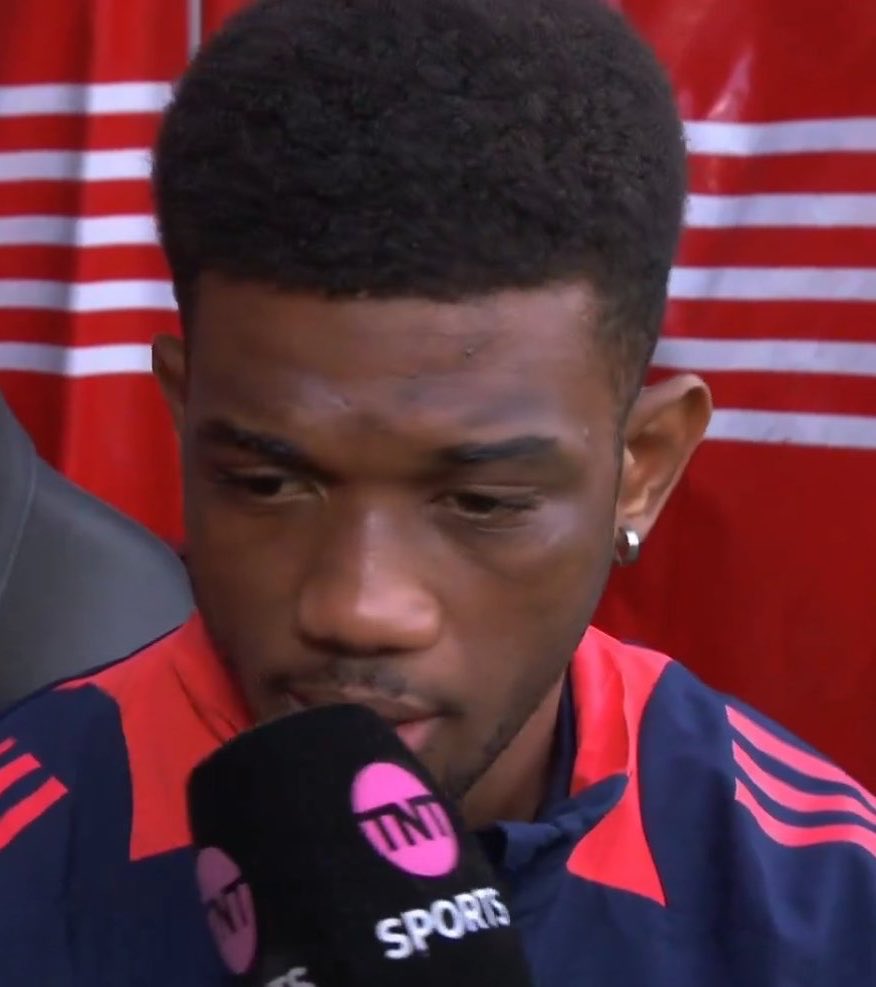
Amad Diallo has gone public with a raw and revealing dressing-room confrontation. The Manchester United forward has detailed a heated exchange with a teammate in which he challenged the player over his recent behaviour and the growing tension it has caused inside the squad. The conversation exposes clear frustration on both sides and lifts the lid on the current atmosphere at Old Trafford.
Amad’s words were direct.
“I told him, ‘Bro, what are you thinking? You have to consider your teammates too. I understand you’re frustrated with the coach and management, but we’re all fighting for the same badge.’”
The teammate’s response was equally uncompromising.
“I don’t need you telling me what to do. If the coach or management have a problem with me, they should tell me themselves. I’m tired of everyone blaming me.”
Those two statements, placed together, paint a picture of a squad dealing with internal friction. One young player demanding collective responsibility and perspective. Another rejecting the criticism, redirecting the blame toward the coaching staff and hierarchy, and expressing a sense of being unfairly targeted.
Amad chose to confront the issue head-on. He acknowledged the teammate’s frustration with the coach and management yet insisted that personal grievances cannot come at the expense of the group. The badge, in his view, still comes first. That message is simple and powerful. It is also the kind of intervention that can either clear the air or deepen existing divides.
The teammate heard something different. He rejected the idea that a colleague had any right to question his behaviour. He made it clear that only the coach or management should address him. And he framed himself as the victim of repeated blame. The defensive tone suggests a player who feels isolated and under constant scrutiny.
Dressing-room culture is built on these moments. When behaviour begins to affect the collective, someone eventually speaks up. Amad has taken that responsibility. His willingness to challenge a teammate shows growing confidence and a refusal to stay silent when he believes the squad is being damaged. The response he received shows how difficult that conversation has become.
The exchange reveals two conflicting mindsets. Amad is focused on the shared fight and the need for mutual consideration. The teammate is focused on personal autonomy and a belief that criticism should only come from above. Those positions are hard to reconcile without further tension.
Frustration with the coach and management is clearly present. Amad recognised it in the moment and tried to separate it from the duty players still owe each other. The teammate refused that separation. In his eyes the issues sit entirely with the people above him, and fellow players have no role in the discussion.
That stance creates a problem. Squads that function at a high level police their own standards. Players hold each other accountable without waiting for official intervention. When that process is rejected outright, the collective weakens. Amad attempted to uphold it. The rejection he met suggests the culture is currently under strain.
By making the conversation public, Amad has ensured the issue cannot be dismissed or contained. The exact words are now known. The squad, the coaching staff and the supporters can see the tone of the exchange. The teammate knows his reply is also on record. The private has become public.
Trust is the foundation of any successful group. When one player feels the need to tell another that he must consider his teammates, it signals that the behaviour in question has already caused damage. When the response is immediate dismissal and a claim of being unfairly blamed, it signals that the damage may run deeper than one conversation.
Amad’s approach contained an element of understanding. He did not ignore the teammate’s frustration with the coach and management. He simply insisted that the badge and the group still matter more. That balance makes the confrontation more credible. It was not pure accusation. It was a demand for perspective at a moment when perspective was missing.
The teammate offered no such balance. His reply shut the door. He rejected the premise of the criticism and positioned himself as the one being wronged. That leaves little space for resolution without external involvement from the coaching staff.
Manchester United’s season has already been marked by pressure and scrutiny. Internal tension of this nature only adds to the load. Players who feel permanently blamed become harder to reach. Players who feel their teammates are not considering the group become more willing to speak out. Both dynamics are now visible.
The fact that Amad felt compelled to have the conversation at all is significant. Young players often stay quiet in these situations. Choosing to confront a teammate over behaviour and its effect on the squad shows a level of conviction and leadership that will be noted inside the building.
The teammate’s reply will also be noted. A refusal to accept peer feedback and a clear expression of resentment toward the wider environment are not easily ignored. The coaching staff now have a public record of both sides of the exchange.
Squads can survive disagreement. What they struggle to survive is the breakdown of shared standards. Amad has drawn a line around the idea that teammates still owe each other consideration. The player he confronted has rejected the right of anyone except the coach and management to enforce that idea. The gap between those two positions is the real story.
The coming days will show whether the confrontation leads to any form of resolution or simply hardens the existing tension. Amad has put his view on record. The teammate has put his resistance on record. The rest of the squad is left in the middle. One player demanded that the group still comes first. The other rejected the criticism and pointed elsewhere. The heated exchange has made the internal friction impossible to ignore.
Amad Diallo has revealed the conversation. The tension inside Manchester United is now out in the open. And the club must deal with what it has exposed.