
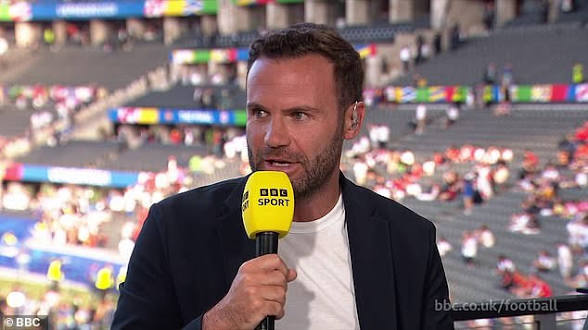
A former Manchester United favourite has delivered one of the most cutting individual assessments of the season. Juan Mata has reportedly questioned whether a current United star even deserves to be playing at the highest level, raising serious concerns about the player’s attitude, lack of vision, and complete absence of positive influence on matches. The Spanish midfielder went further than most, suggesting that the team could actually perform better if the player was removed from the side altogether. 😳
“I don’t think he is a footballer. His attitude speaks volumes about him. He doesn’t control the tempo of the game, and whenever he loses the ball, his reaction is absolutely awful. He has zero impact when he plays, almost like someone is forcing him to be there. He doesn’t play like someone who loves this sport the way we do. Take him out of the team and see how much better we can succeed,” Mata is reported to have said.
Those words are devastating. Coming from a player known for his intelligence, technical quality and measured public comments during his own time at Old Trafford, the strength of the language stands out. “I don’t think he is a footballer.” “Zero impact.” “Almost like someone is forcing him to be there.” “Take him out of the team and see how much better we can succeed.” This is not mild tactical criticism. This is a fundamental questioning of the player’s right to occupy a place in a Manchester United starting eleven.
The Core of the Criticism: Attitude and Absence of Influence
Mata’s assessment focuses less on isolated mistakes and more on a deeper problem of presence and mentality. According to the reported comments, the player shows little visible passion, fails to dictate or even influence the tempo of matches, and reacts poorly the moment possession is lost. In Mata’s eyes these are not minor flaws. They are symptoms of a footballer who is not fully engaged with the demands of the level.
Controlling the tempo has always been a hallmark of the best midfielders and progressive players. The ability to slow the game down when necessary, accelerate it when the moment is right, and constantly offer a reliable option to teammates separates those who merely occupy space from those who shape matches. Mata is arguing that this particular United star does none of those things. The result, in his view, is a player who occupies a position without filling it.
The description of the reaction to losing the ball is equally damaging. Elite players are expected to respond to turnovers with immediate intensity — either by attempting to win the ball back or by recovering position at speed. A visibly poor reaction in those moments is often interpreted as a lack of care or competitive edge. Mata has made clear he finds that aspect of the player’s game unacceptable.
“Almost Like Someone Is Forcing Him to Be There”
Perhaps the most striking image in the reported comments is the suggestion that the player looks as if he is being forced to participate. That single phrase paints a picture of a footballer going through the motions, disconnected from the emotional and competitive demands of representing Manchester United. For a club whose identity has always been tied to high intensity and visible desire, the accusation is particularly harsh.
Mata reinforced the point by stating that the player “doesn’t play like someone who loves this sport the way we do.” The contrast is deliberate. Mata is drawing a line between those who appear driven by genuine love for the game and those who seem to treat it as an obligation. In his assessment, the current United star falls firmly into the latter category.
When a former player of Mata’s technical pedigree and temperament uses language this strong, it carries extra weight. He is not known for explosive ranting. That makes the bluntness of “I don’t think he is a footballer” even more powerful. It suggests a conclusion reached after prolonged observation rather than a reaction to one difficult afternoon.
The Suggestion That United Would Be Better Without Him
The most operationally significant part of Mata’s comments is the direct suggestion that the team could improve by removing the player. “Take him out of the team and see how much better we can succeed.” This moves the discussion from individual criticism into selection territory. It is one thing to say a player is underperforming. It is another to claim that his absence would actively benefit the side.
That claim will fuel intense debate among supporters. Those who have grown frustrated with the player’s lack of influence will feel vindicated. Those who believe in continuity and patience will argue that public calls for exclusion from a former teammate only increase the pressure and make improvement harder. Either way, the conversation about the player’s place in the team has been forced into the open in the starkest terms.
Managers are rarely swayed solely by external commentary, but sustained and high-profile criticism can alter the atmosphere around a selection decision. Every future start will now be viewed through the lens of Mata’s verdict. Every quiet performance will be cited as further evidence. The margin for error has narrowed considerably.
Fan and Media Reaction: Shock and Recognition
As the comments circulated, the reaction among Manchester United supporters was a mixture of shock at the severity and recognition of the underlying issues. Many admitted they had held similar private concerns about the player’s visible lack of impact and emotional engagement. Hearing those concerns articulated so bluntly by a respected former United midfielder gave the frustrations a new legitimacy.
Others expressed discomfort at the personal nature of the attack. Questioning whether someone “is a footballer” and suggesting the team would be better without him crosses a line that some feel should only be crossed with extreme caution. There is a difference, they argue, between demanding higher standards and publicly dismantling a player’s basic right to be considered one.
Media voices have begun to weigh in along similar dividing lines. Some have praised Mata for refusing to soft-pedal obvious shortcomings. Others have cautioned that such extreme public verdicts can become self-fulfilling, damaging confidence to the point where recovery becomes almost impossible. What unites almost all observers is the acknowledgement that the player’s current level of influence is far below what is required at Manchester United.
Implications for the Dressing Room and the Manager
Public criticism of this intensity never stays neatly outside the dressing room. Players talk. They notice when a former colleague essentially says one of their teammates does not belong. The individual at the centre of the storm now faces a significant test of resilience. The only convincing response is a sustained run of performances that demonstrate clear impact, better reactions to setbacks, and visible hunger.
The manager must also manage the fallout. Continuing to select the player will be interpreted by some as defiance of an obvious problem. Omitting him will be read by others as a reaction to external pressure. The ideal scenario — rapid and obvious improvement — is the one that has so far failed to materialise. Until it does, the debate will only grow louder.
There is also a broader cultural question. Mata’s comments touch on something deeper than tactics or form. They speak to the emotional contract between player and club. Manchester United has always demanded more than technical competence. It has demanded visible desire and a sense of privilege at representing the badge. When a former player publicly states that one of the current squad is failing that emotional test, it challenges the entire environment.
Looking Ahead: A Defining Period Under the Harshest Light
The coming weeks will be decisive. Every touch, every reaction to losing possession, every moment of apparent detachment will be magnified. Mata has set an extremely high bar for redemption by questioning the player’s basic credentials as a footballer. Only a clear and sustained elevation in performance, intensity and influence will begin to push that verdict into the background.
For now the words remain hanging in the air. “I don’t think he is a footballer.” “Zero impact.” “Take him out of the team and see how much better we can succeed.” These are not phrases that fade quietly. They will be repeated, debated and used as a measuring stick for every future appearance.
Juan Mata has delivered a shocking and deeply personal warning. The player in question has been told, in the most public way possible, that his attitude, his influence and his right to a place in the side are all under serious question. The response he produces from this point will define the next stage of his Manchester United career.
The demand has been made. The scrutiny has intensified. And the suggestion that the team might be better off without him will not be easily forgotten.
MATA HAS SPOKEN. THE VERDICT IS BRUTAL. THE PRESSURE HAS RISEN SHARPLY.