
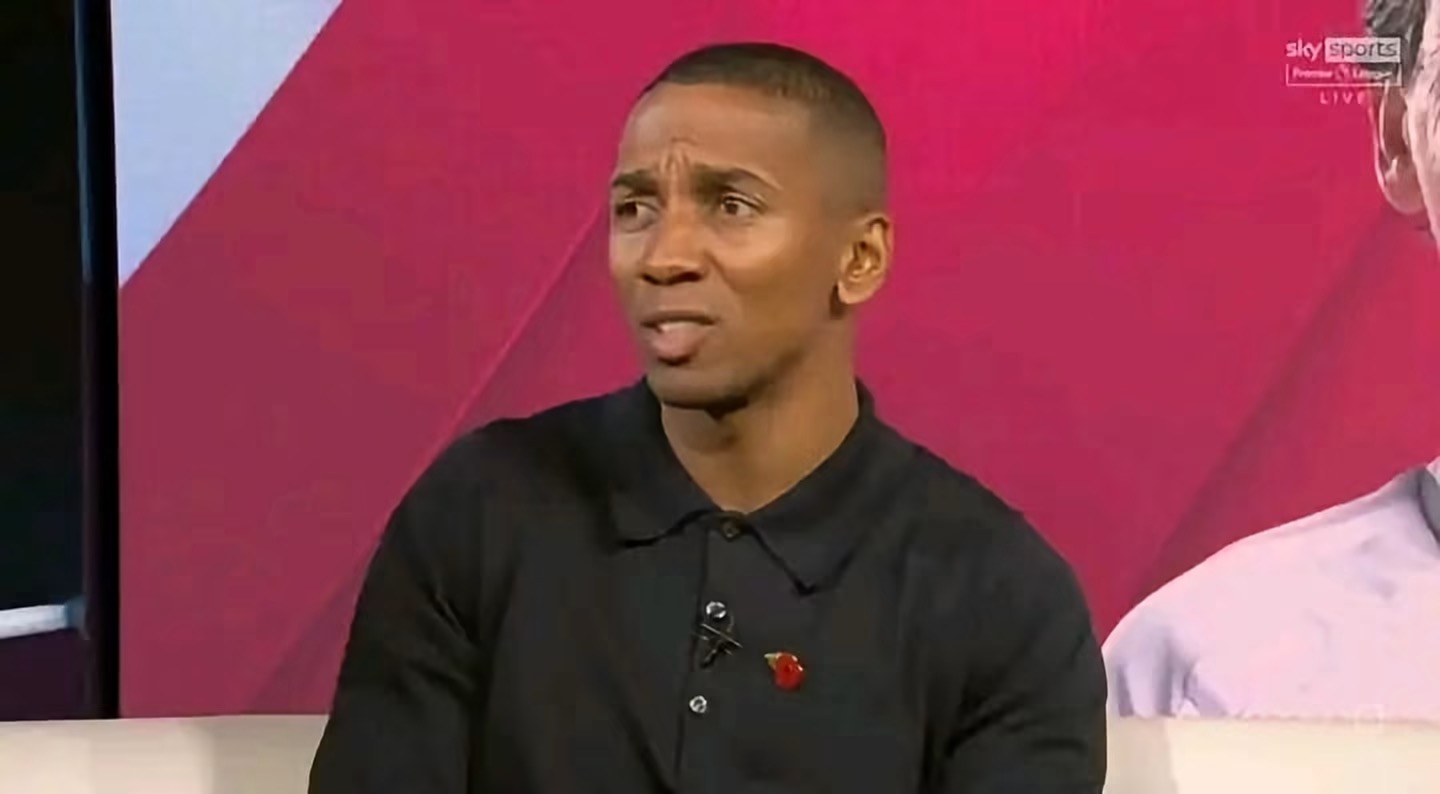
Manchester United’s problems could reportedly stretch far beyond what supporters see on the pitch, with fresh claims about the atmosphere inside the dressing room raising uncomfortable questions about the relationships between several members of the squad. For a club that has spent years trying to restore its identity, the suggestion that players are struggling to connect with one another represents another worrying development. Results, performances and tactical decisions have dominated conversations surrounding Old Trafford, but the latest allegations point towards something potentially more complicated: a dressing room that may no longer be functioning as one united group.
Former Manchester United defender Ashley Young has allegedly raised serious concerns about what he believes is happening behind the scenes, suggesting that the relationship between certain players has deteriorated to a point where it is becoming increasingly difficult to ignore. Having experienced the demands of representing United himself, Young understands that a successful dressing room requires more than talented footballers wearing the same shirt. It requires trust, communication, respect and a willingness to sacrifice individual interests for the benefit of the collective.
According to the comments supplied, Young believes those qualities are not being demonstrated consistently enough by the current group. His alleged criticism was particularly concerning because it did not simply focus on poor performances or individual mistakes. Instead, it questioned whether some players genuinely understand one another, whether relationships within the squad remain healthy and whether everyone is still pulling in the same direction.
“Sometimes it feels like Manchester United players don’t even know each other. It’s hard to watch these games because there is no real connection between them. There needs to be much more unity. Honestly, I think he needs to go because I believe he is contributing to the division in that dressing room. They don’t look like a team that enjoys playing together, and from what I can see, there are serious issues between certain players. I was a footballer, and I know when a dressing room isn’t right. Some of these players simply don’t get along, especially when it comes to him.”
Those are extremely serious allegations, particularly because they suggest that one individual could be contributing to a wider problem. However, the identity of the player has not been established, and there is no independently verified evidence confirming that a particular Manchester United footballer is responsible for division within the squad.
Nevertheless, the underlying issue is one that supporters will understand immediately. Football teams can survive difficult periods, disappointing results and individual mistakes. What becomes much harder to overcome is a breakdown in trust between teammates. When players stop communicating, begin questioning one another’s decisions or lose confidence in the people around them, the consequences can become visible during matches.
A defender may hesitate before passing to a midfielder. An attacker may become frustrated because he believes his teammates are ignoring his movement. A player making an important run might stop receiving the ball, while another begins attempting to solve every problem independently. These moments can appear insignificant individually, but collectively they can create the impression of a team that is playing as a collection of individuals rather than a coordinated unit.
That is precisely the concern surrounding the latest claims.
Young’s alleged comments have placed the spotlight on the relationships between United’s players, with questions emerging about whether the squad possesses the understanding and togetherness required to compete consistently. It is one thing to lose a match because the opposition has performed better. It is another to leave supporters wondering whether the players on the pitch actually trust one another.
For Manchester United, that distinction matters enormously.
The club’s history has been built around teams capable of producing performances through collective determination. There have been periods when individual brilliance made the difference, but the strongest United sides were rarely dependent on one player alone. Their success came from players understanding their responsibilities, supporting one another and maintaining a shared mentality even when matches became difficult.
That culture is difficult to manufacture. It develops through everyday interactions at the training ground, conversations in the dressing room, competition for places and the willingness to accept criticism without allowing disagreements to damage the wider group.
If the current allegations have any substance, United would need to examine whether those foundations remain strong enough.
The most intriguing part of the reported criticism is Young’s suggestion that the problem may be connected to one particular individual. Rather than describing a general lack of confidence or a temporary disagreement between teammates, the former defender allegedly believes one player is contributing to the division.
That naturally raises questions about the nature of the alleged problem.
Is it a personality clash? Is it frustration over certain players receiving preferential treatment? Could disagreements over playing time, responsibilities or performances be creating tension? Or is the issue simply a difference in mentality between individuals who have not managed to develop a strong relationship?
Without verified information, none of those explanations can be treated as fact. However, they illustrate why dressing-room harmony is such an important subject at a club of United’s size.
Every squad contains different personalities. Some players are naturally outspoken, while others prefer to remain quiet. Some demand high standards from everyone around them, while others respond better to encouragement. Those differences do not automatically create problems. In fact, a dressing room can become stronger when different personalities learn to respect one another.
The difficulty begins when disagreements stop being productive.
A disagreement about a training exercise is normal. Frustration after a poor performance is understandable. Even arguments between teammates can happen in competitive environments. But when those disagreements become personal, communication can suffer, and players may begin carrying their frustrations into matches.
That is why the alleged suggestion that certain United players no longer get along has attracted so much attention.
Supporters have spent considerable time analysing the team’s performances, trying to understand why talented individuals sometimes struggle to produce convincing collective displays. Tactical organisation, recruitment, injuries and managerial decisions are all legitimate subjects for discussion. Yet there is another factor that cannot be measured through statistics: the level of trust between teammates.
A team can complete thousands of passes during a season and still lack genuine understanding. Players can share a dressing room every day without developing the relationships necessary to make difficult moments easier. Football requires players to make decisions quickly, often without having time to communicate verbally. That level of understanding depends on familiarity and trust.
When those connections are missing, the team can look disjointed.
Young’s alleged comments also raise a difficult question for the club’s leadership: how should Manchester United respond if genuine tensions exist between members of the squad?
The easiest response would be to dismiss the criticism as outside noise. Former players are entitled to their opinions, and comments from people who are no longer involved in the day-to-day running of the club should not automatically be treated as evidence of internal problems.
However, ignoring genuine dressing-room concerns would be equally dangerous.
A club’s leadership must understand what is happening beyond the public performances. Managers and coaching staff spend considerable time observing how players interact, how they respond to setbacks and whether they demonstrate the right attitude towards collective responsibilities. Those observations can reveal problems that supporters may never see.
If disagreements are affecting performances, they must be addressed before they become more serious.
That does not necessarily mean immediately selling a player or allowing one person’s opinion to determine the future of another. Decisions of that magnitude require evidence, careful assessment and an understanding of the consequences for the entire squad.
But the club cannot afford to overlook the importance of unity.
Manchester United have experienced enough difficult periods to understand that rebuilding a competitive team involves more than signing talented footballers. Recruitment must consider personality, professionalism, tactical suitability and the ability to operate within a demanding environment.
A player can possess extraordinary technical ability and still struggle to contribute positively to a team’s culture. Equally, a quiet individual should not automatically be considered a problem simply because he does not display leadership in an obvious way.
What matters is whether every player understands that the collective comes first.
The alleged criticism also places pressure on the senior members of the dressing room. Experienced players are expected to help establish standards, guide younger teammates and prevent disagreements from becoming distractions. Their influence can be particularly important during difficult periods when confidence is low and frustration is high.
At United, leadership cannot simply be measured by captaincy or reputation. It must be demonstrated through actions.
Who encourages teammates after mistakes? Who takes responsibility when performances fall below expectations? Who communicates when the team is struggling? And who is prepared to put personal frustration aside when the club needs everyone working together?
Those questions become increasingly important when allegations of division begin circulating.
There is also a responsibility on the coaching staff. Managers cannot control every personal relationship within a squad, but they can establish an environment in which professional standards are non-negotiable. Players must understand that disagreements cannot be allowed to undermine preparation, tactical discipline or matchday responsibilities.
If an individual is genuinely damaging the atmosphere, the situation must be investigated rather than handled through public speculation.
At the same time, the manager must avoid creating an environment in which players feel unable to express frustration. Healthy competition and honest conversations are essential. A dressing room in which everyone agrees with everything is not necessarily a strong dressing room. What matters is the ability to disagree while maintaining mutual respect.
That distinction could prove crucial in understanding the situation Young allegedly described.
The most damaging possibility would be a squad divided into smaller groups, with players increasingly identifying with certain teammates rather than the team as a whole. Once that happens, even ordinary football decisions can become complicated. A player may interpret a missed pass as a deliberate decision. Another may feel excluded from important conversations. Frustration can grow, and the original disagreement may become much bigger than the incident that started it.
None of this has been established as happening at Manchester United. But it explains why claims about dressing-room division should not be dismissed as insignificant.
For supporters, the frustration is understandable. They want to see a team that fights for one another, celebrates together and responds collectively when something goes wrong. They do not expect every player to be best friends, but they do expect professionalism and a shared commitment to the badge.
The sight of teammates appearing disconnected can be particularly difficult for supporters who remember United sides that played with unmistakable togetherness.
That expectation creates enormous pressure on the current squad.
Every disappointing performance invites another round of questions. Every visible disagreement becomes a talking point. Every player who appears frustrated can become the subject of speculation about what is happening behind the scenes.
The club must therefore be careful not to allow rumours to become accepted as facts. An allegation that one individual is responsible for division is serious, and the player should not be judged without reliable evidence. Dressing-room relationships are private matters, and outsiders rarely have access to the complete picture.
Still, the wider conversation about unity is important.
Manchester United need a squad in which players trust the people beside them, respect the decisions of the coaching staff and understand that individual ambition must operate within the interests of the team. If those principles are missing, even the most expensive recruitment strategy will struggle to deliver consistent success.
Ultimately, the question raised by Young’s alleged comments is bigger than the identity of one player. It is whether United can create an environment in which everyone feels responsible for the team’s progress.
A successful dressing room does not require identical personalities. It requires a common purpose.
And if the club genuinely believes that one individual’s behaviour is damaging that purpose, the issue must be handled decisively, fairly and privately.
For now, the identity of the player supposedly at the centre of the controversy remains unknown. There is also no verified confirmation that Ashley Young made the quoted remarks or that a particular United player is dividing the dressing room.
But the discussion has introduced an uncomfortable subject for a club that desperately needs stability: talent alone will not bring Manchester United back to where they want to be. The players must also learn to function as one team.
Because when teammates stop trusting one another, the damage can become just as serious as anything happening on the pitch.