
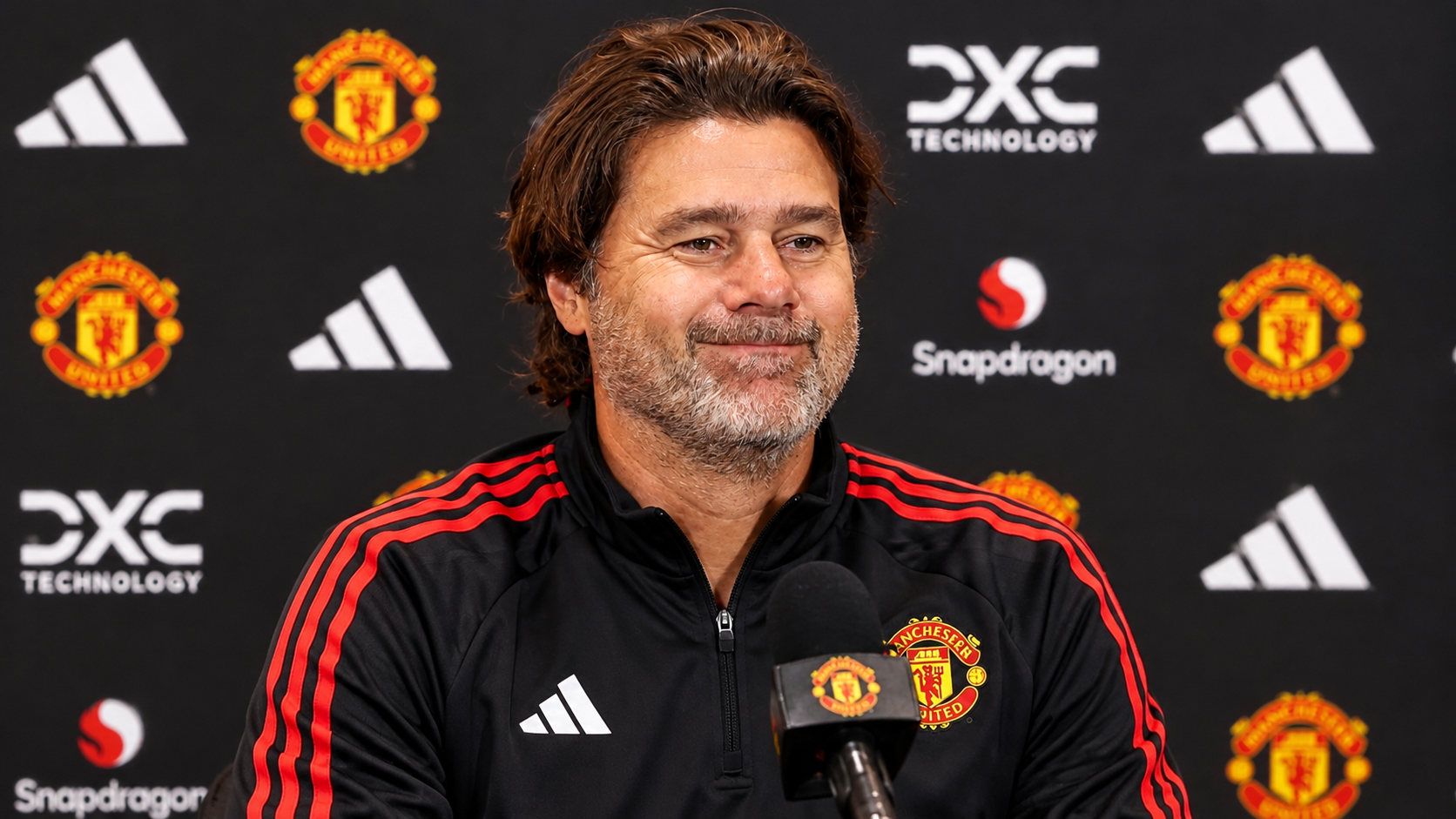
POCHETTINO STRIPS BRUNO OF THE CAPTAINCY AND NAMES HIS OWN LEADER!
Mauricio Pochettino could be preparing to make one of the biggest statements of his Manchester United reign before even taking charge of his first competitive match, with reports suggesting that the new manager wants to remove Bruno Fernandes as club captain and appoint a leader of his own choosing. It would be a significant decision, one that could immediately change the atmosphere around Old Trafford and send a clear message to every member of the dressing room about the direction in which the club intends to move. Pochettino is understood to believe that rebuilding Manchester United must begin with leadership, discipline and a completely different mentality, and he reportedly sees the captaincy as the perfect place to start. Rather than simply inheriting the existing structure, the Argentine wants to establish his own standards, identify the personalities he trusts and give the responsibility to someone he believes can represent his vision for the club.
The potential decision has already created an enormous talking point because Bruno Fernandes has been one of Manchester United’s most influential figures in recent years. Since arriving at Old Trafford, the Portuguese midfielder has carried significant responsibility, contributed goals and assists and regularly been expected to provide inspiration when the team has struggled. His appointment as captain placed him at the centre of the club’s leadership structure, making him one of the most recognisable representatives of the current Manchester United squad.
However, a new manager often arrives with a different understanding of leadership.
Pochettino is not simply looking at what a player has achieved in previous seasons. He would be assessing how individuals behave during difficult moments, how they respond to instructions, how they communicate with teammates and whether they possess the personality required to lead an entirely new project.
That is why the captaincy could become one of his earliest and most important decisions.
The Argentine has previously managed clubs where expectations were enormous and dressing-room personalities demanded careful management. He understands that a successful team requires more than technical quality. Players must accept responsibility, respect the manager’s authority and understand that individual ambition cannot come before the collective objectives of the squad.
For a club attempting to rebuild its identity, those principles become particularly important.
Pochettino reportedly believes that Manchester United need a fresh beginning, and he does not want the rebuild to be limited to changing formations, adjusting training sessions or bringing in new signings. His ambition is to change the mentality of the entire squad, creating an environment where every player understands what is expected of him.
Choosing his own captain would therefore represent much more than changing the person who wears the armband.
It would be a declaration that a new leadership structure is being established.
For Bruno, the situation would naturally be difficult. Losing the captaincy would represent a significant change in his position within the squad, especially after carrying the responsibility through several challenging periods. However, being removed as captain would not automatically mean that he has lost his importance to the team.
Managers make decisions about leadership for different reasons. Some prefer a captain who leads through communication and emotional influence, while others look for someone whose personality reflects the standards they want to establish. There is no single formula for choosing the right individual.
Pochettino would have to decide which qualities Manchester United need most.
Does the club require a more vocal presence? Someone who can organise teammates during difficult matches? A player who commands respect through consistency and professionalism? Or an individual whose influence extends beyond the pitch and into the daily culture of the training ground?
Those questions could determine the identity of Bruno’s potential replacement.
And that is where the biggest mystery begins.
The player reportedly being considered is someone Pochettino believes he can trust with the responsibility. The manager is said to view him as a figure capable of setting standards, taking responsibility and helping establish the mentality he wants throughout the squad.
That trust could prove decisive.
A captain does not need to be the team’s most technically gifted player, nor does he necessarily need to be its biggest personality. What matters is whether his teammates respect him and whether he understands the responsibility of representing the club.
At Manchester United, that responsibility is enormous.
The captain is expected to communicate with the referee, encourage teammates, maintain concentration during difficult moments and represent the squad in public. He must also understand that his actions are constantly being examined by supporters, journalists and former players.
Every decision carries additional attention.
A captain who reacts angrily after a mistake may influence the mood of the entire team. A captain who remains composed can help teammates regain their concentration. A captain who accepts responsibility after a defeat can demonstrate that the club’s standards are more important than personal reputation.
These are the qualities Pochettino would need to identify.
The manager’s reported intention to make major changes throughout the squad suggests that he wants every player to understand that previous status will not guarantee future privileges. Reputation, transfer fees and past achievements would not automatically determine who receives responsibility.
Everyone would have to demonstrate that they deserve their position.
That message could be particularly important at a club where expectations have remained high despite repeated periods of inconsistency. Manchester United have experienced several managerial changes since Sir Alex Ferguson’s departure, and every new appointment has brought fresh promises of rebuilding the team and restoring its identity.
But changing the manager is only one part of the process.
A successful rebuild requires the players to embrace the new direction. They must accept different tactical instructions, adapt to new training demands and understand that selection will depend on what they contribute to the team.
Pochettino would be aware that the dressing room needs clarity from the beginning.
If he arrives and immediately identifies the captain he wants, it could help establish the hierarchy around which he intends to build. Players would know who is expected to lead, who represents the manager’s standards and what kind of behaviour will be encouraged.
It could also create competition.
Players who previously believed their positions were secure may discover that the new manager has different expectations. Individuals who have struggled for recognition could see an opportunity to become more influential. Younger players may be encouraged to take greater responsibility rather than waiting for senior teammates to guide every situation.
That is how a new culture can begin to develop.
However, Pochettino would also need to handle the transition carefully. Removing Bruno’s captaincy could create unnecessary tension if the decision is communicated poorly or appears to be a punishment rather than part of a wider footballing plan.
The Portuguese midfielder remains an important figure, and the manager would need to explain that leadership is not limited to wearing an armband.
There is a difference between losing the title of captain and losing influence within a team.
Some of football’s most respected leaders have continued playing important roles after handing over the armband. They have supported new captains, helped younger teammates and contributed to the team’s development without requiring the official title.
Whether Bruno would accept that arrangement remains an open question.
What matters most is whether Pochettino can convince the entire squad that the decision is being made for the benefit of Manchester United rather than to single out one individual.
The new manager would also need to consider the reaction of supporters. Bruno has developed a strong connection with many fans because of his commitment and willingness to take responsibility. Even when performances have been disappointing, he has frequently remained one of the players expected to create something in difficult circumstances.
Removing his captaincy could therefore divide opinion.
Some supporters might view it as an unnecessary disruption, particularly if they believe Bruno remains capable of leading the team. Others might welcome the opportunity for a fresh leadership structure, arguing that a new manager should have the freedom to choose the people he trusts.
Both reactions would be understandable.
Ultimately, the decision would have to be judged by what happens on the pitch and how the squad responds behind the scenes.
A new captain cannot solve every problem at Manchester United. The team would still need better organisation, consistent performances, effective recruitment and a clear tactical identity. But leadership can influence how players respond to those challenges.
A strong captain can help maintain standards when results become difficult. He can remind teammates of their responsibilities, demand concentration and ensure that frustration does not become an excuse for poor performances.
That influence can be invaluable during a rebuilding process.
Pochettino would also understand that the captaincy decision could influence the way younger players view the new project. If the manager chooses someone based on professionalism, commitment and responsibility rather than reputation alone, it sends a message about the qualities required to succeed under him.
Players would know that leadership must be earned.
The same principle would apply to the rest of the squad. Nobody should assume that previous achievements guarantee a place in the starting eleven. Nobody should believe that being an established name makes them immune from criticism.
Competition would have to become part of everyday life at Carrington.
For Pochettino, that is likely to be one of the most important challenges. He must create a squad in which players push one another without allowing competition to damage relationships. He needs individuals who can disagree professionally, accept difficult decisions and continue working for the collective objective.
That balance is essential.
If the new captain understands the manager’s expectations and can communicate them effectively, he could become an important part of that process. He would be expected to support the coaching staff while also representing the concerns of his teammates.
It is not an easy responsibility.
The captain must be trusted by the manager, but he must also retain the respect of the dressing room. If players believe he is simply an extension of the coaching staff, his influence could become limited. If he ignores the manager’s instructions to maintain popularity among teammates, the leadership structure could become ineffective.
The strongest captains understand both responsibilities.
That is why Pochettino’s reported preference for someone he trusts could be significant. He would need an individual who understands his footballing ideas and possesses the character to communicate them without creating unnecessary conflict.
The manager cannot do everything himself.
He needs leaders on the pitch who can recognise problems, organise teammates and respond when matches become chaotic. A coach can provide instructions before kick-off, but the captain must help ensure that those instructions are followed when the pressure rises.
That could be the quality Pochettino values most in his preferred candidate.
There is also a wider message behind the reported decision. Manchester United cannot continue rebuilding around the assumption that changing a few players or introducing a new tactical system will automatically solve every problem. The club needs a consistent structure, clear standards and individuals prepared to take responsibility for maintaining them.
The captaincy is one visible part of that structure.
If Pochettino decides that Bruno is no longer the right person to lead the team, he would need to make the reasoning clear and ensure that the new captain understands the scale of the responsibility. The decision would attract enormous attention, but the real test would begin afterwards.
Can the new leader unite the dressing room? Can he influence performances? Can he help establish the standards the manager wants? And can he demonstrate that the armband represents responsibility rather than status?
Those are the questions that would follow the appointment.
For Bruno, the challenge would be responding professionally and demonstrating that he can remain an important part of the project regardless of the captaincy decision. His experience and quality could still be valuable, but he would have to accept that a new manager is entitled to establish his own leadership structure.
For the rest of the squad, the message would be equally clear: the past will not determine the future.
Pochettino wants to build a Manchester United team that reflects his own standards, and choosing a captain could be his first major step towards achieving that objective.
The identity of the player he reportedly wants to hand the armband to remains the biggest unanswered question in this developing storyline. Whoever receives the responsibility would immediately face enormous expectations, because leading Manchester United is not an ordinary appointment.
It is a responsibility that comes with history, pressure and the demand to deliver.
And if Pochettino truly intends to change everything at Old Trafford, his first major decision could send a message that nobody in the dressing room is untouchable.
A new manager, a new captain and potentially a completely different Manchester United. The rebuild would not simply be about changing the players on the pitch. It would be about changing the mentality of the entire club.