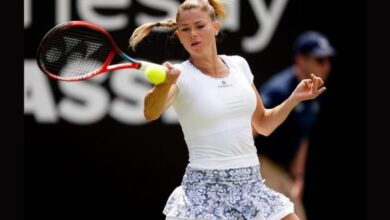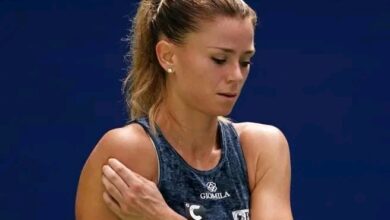

In the glittering, unpredictable world of professional tennis, few stories captivate like that of Emma Raducanu. At just 22 years old, the British sensation has already etched her name into the history books as the 2021 US Open champion—the first qualifier in the Open Era to claim a Grand Slam singles title, and the youngest British woman to do so since Virginia Wade in 1977. Born in Toronto to a Romanian father and Chinese mother, and raised in Bromley, England, Raducanu’s multicultural background mirrors the global appeal she’s cultivated on and off the court. Yet, her career has been a rollercoaster of triumphs, setbacks, and relentless reinvention. As 2025 draws to a close with Raducanu ranked No. 29 in the WTA standings, the question on every fan’s mind is: What’s next for this prodigy poised on the cusp of a full resurgence?
The Meteoric Rise: A Fairytale in Flushing Meadows

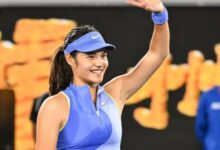
Raducanu’s breakthrough remains the stuff of legend. In September 2021, as an 18-year-old wildcard ranked outside the top 150, she stormed through the US Open draw without dropping a set, defeating the likes of Sara Sorribes Tormo and Shelby Rogers en route to the final. Facing Leylah Fernandez in a clash of teenage titans, Raducanu triumphed 6-4, 6-3, becoming an overnight global icon. The victory propelled her to a career-high No. 10 ranking and sparked a media frenzy, with endorsements from Nike, Wilson, and Porsche flooding in. Off the court, her poise, intelligence and effortless charm—honed through a bilingual upbringing and A-level studies—made her a role model for aspiring athletes balancing sport and education.
But fairy tales rarely have simple sequels. The pressure of instant fame, coupled with the physical toll of the pro tour, soon tested Raducanu’s mettle. Injuries mounted: ankle surgeries in 2023 sidelined her for months, dropping her to No. 303. A revolving door of coaches added to the turbulence. “I’ve had to pull myself out of very difficult times,” Raducanu has reflected, alluding to the mental and emotional grind of early 2025, including a harrowing stalking incident in Dubai that left her in tears on court. Yet through it all, her serve has evolved into a weapon, her groundstrokes sharper and her resilience unbreakable.
A Resilient 2025: Consistency Over Conquests
If 2023 was about survival and 2024 marked a tentative return, 2025 has been Raducanu’s year of consolidation—a “solid floor,” as she puts it, built on 50 matches played, the most in her career. She ended the season as British No. 1, a title she reclaimed with grit, finishing inside the top 30 for the second time since her US Open high.
Key highlights painted a picture of progress amid frustration. At the Australian Open she reached the third round—her best result there yet—before falling to world No. 1 Iga Świątek. March brought her deepest WTA 1000 run: a quarter-final at the Miami Open, where she toppled No. 8 Emma Navarro for her first top-10 hard-court win. On grass she shone at home, reaching the London quarter-finals and upsetting No. 9 Maria Sakkari at Wimbledon before a tight loss to Aryna Sabalenka.
The North American hard-court swing was mixed. A semi-final in Washington, D.C.—her best singles result of the year—paired with a doubles semi-final alongside Elena Rybakina showcased versatility. But the US Open ended in heartbreak: a third-round demolition by Rybakina, 6-1, 6-2. Late-season woes struck hard—a first-round exit in Ningbo amid physical struggles, followed by illness and a lower-back flare-up that forced her to end the year early, skipping Tokyo, Hong Kong and exhibitions. Still, with 28 wins against 22 losses and over $1.45 million in prize money, 2025 was her most consistent campaign, proving she can compete week-in, week-out against the elite.
Off-court, Raducanu’s maturity shone. She navigated the Dubai stalker saga with grace, securing a restraining order and advocating for player safety. Philanthropy remained a constant: through her AirWayz platform she funnelled coaching-session fees to the LTA’s youth programmes, while surprising young fans with dream sessions. In a nod to stability, she extended her partnership with coach Francisco Roig—Rafael Nadal’s former confidant—into 2026, adding physio Emma Stewart and fitness trainer Yutaka Nakamura (ex-Sharapova and Osaka) to her team. “It’s been a pretty successful three weeks,” she said of Roig’s early impact, emphasising tactical tweaks to close out matches from leads—a recurring 2025 Achilles’ heel.
Looking Ahead: A 2026 Blueprint for Breakthroughs
As December 2025 unfolds, Raducanu is laser-focused on pre-season prep: an intensive training block with Roig and Nakamura to fortify her body and mentality. “I can become one of the best athletes in tennis,” she has declared, eyeing Simona Halep’s athleticism and Li Na’s warrior ethos as inspirations.
The year kicks off Down Under: teaming with Jack Draper for Great Britain’s United Cup (late December 2025/early January 2026), a mixed-team event offering ranking points and a morale boost before the Australian Open. Seeded at Melbourne Park for the first time thanks to her top-30 finish, Raducanu aims to eclipse her third-round mark. February brings WTA 500 action in Abu Dhabi and WTA 1000s in Doha and Dubai, where she craves deeper runs to climb toward the top 20.
Clay and grass could unlock new chapters: targeting semi-finals or better at the WTA 1000s in Madrid and Rome, then defending her Wimbledon form en route to a home Slam push. The hard-court majors—US Open especially—loom large, with Raducanu hungry to reclaim Flushing Meadows magic. “The top players have a point to prove against me,” she noted after New York, a mindset shift signalling confidence. Experts predict a top-20 return in 2026, but warn the real test lies in sustaining it—converting close calls into titles.
Challenges persist: managing injury risks, mastering mental fortitude in three-set marathons and navigating the WTA’s power era dominated by Świątek and Sabalenka. Yet with Roig’s tactical acumen and Nakamura’s conditioning prowess, Raducanu’s toolkit is sharper than ever.
The Emma Effect: Beyond the Baseline
Raducanu’s appeal transcends stats. She’s a cultural bridge—fluent in English, Mandarin and Romanian—whose off-court ventures, from Harvard visits to Vogue covers, amplify her voice. As she eyes 2026, the WTA Tour hungers for her return to contention; fans for the joy of her “happy dance” celebrations. In a sport of relentless scrutiny, Raducanu’s story is one of quiet defiance: not just surviving the spotlight, but thriving in it.
The next chapter? Expect fireworks. After all, as history proves, Emma Raducanu doesn’t just play tennis—she redefines it.