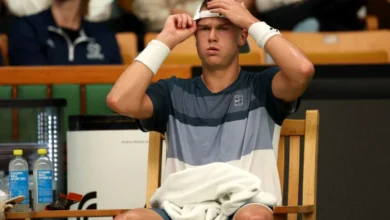
**Holger Rune Admits ‘The Worst Moment’ of His Entire Life and It Was Not His Achilles Injury


Holger Rune, the talented Danish tennis star who reached a career-high World No. 4, has faced significant challenges in recent years—including a devastating Achilles tendon rupture in October 2025 during his semi-final at the Stockholm Open. The injury, which he described as “pretty brutal” and “kind of the worst thing that could happen” to that part of the body, required surgery and sidelined him for an extended period. He has been open about the physical and mental demands of rehab, approaching his return with caution while emphasizing personal growth from the setback.
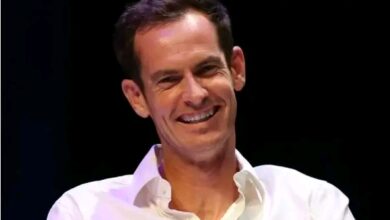
Yet, in a recent candid interview on the *Served with Andy Roddick* podcast, Rune made a surprising revelation: the Achilles tear, despite its severity, was not the lowest point of his life or even his career. Instead, he pointed to the period surrounding his rise to World No. 4 in 2022-2023 as the truly darkest chapter.


“I think when I reached my career high actually it was possibly the worst moment of my life actually with everything,” Rune confessed. “So it was really you know a weird moment.”
He elaborated that at the peak of his success—marked by deep Grand Slam runs, Masters titles, and elite rankings—he lacked structure in his personal life. Frequent coaching changes, the intense pressure of expectations, and the absence of stability created chaos off the court. “I had no really like structure on my life in this moment,” he explained, “with first of all with the coaching” and broader life elements that left him feeling lost amid the accolades.
This period of rapid ascent brought external triumphs but internal turmoil. Rune has since reflected on how the lack of balance and clear direction amplified the mental grind, making success feel hollow. The contrast is stark: while the Achilles injury was a clear physical blow with a defined recovery path, the earlier “worst moment” involved deeper emotional and existential struggles—questioning his identity, support system, and purpose beyond results.
Rune’s honesty highlights a common but rarely discussed reality in elite sports: breakthroughs can sometimes coincide with personal lows. He has used both experiences—the structured rehab from injury and the lessons from his unstructured peak—as catalysts for growth. Reuniting with childhood coach Lars Christensen provided stability, and the forced time away from competition has allowed introspection.
As Rune progresses in his Achilles recovery—walking almost normally by early 2026 and eyeing a cautious return—he carries renewed perspective. The injury, once seen as devastating, now feels like a manageable hurdle compared to the disorientation of his earlier high. His journey underscores resilience: true lows aren’t always the most visible injuries but the moments of internal disconnection.
Fans can take heart in Rune’s transparency. At just 22, he is rebuilding not just his body but a more grounded foundation for sustained success. When he steps back onto the court, it will be with hard-earned wisdom—proof that even the brightest talents navigate profound darkness before emerging stronger.