“I Still Don’t Feel Loose”: Viktor’s Raw Confession About the One Thing Holding Him Back — It’s More Personal Than You Think!

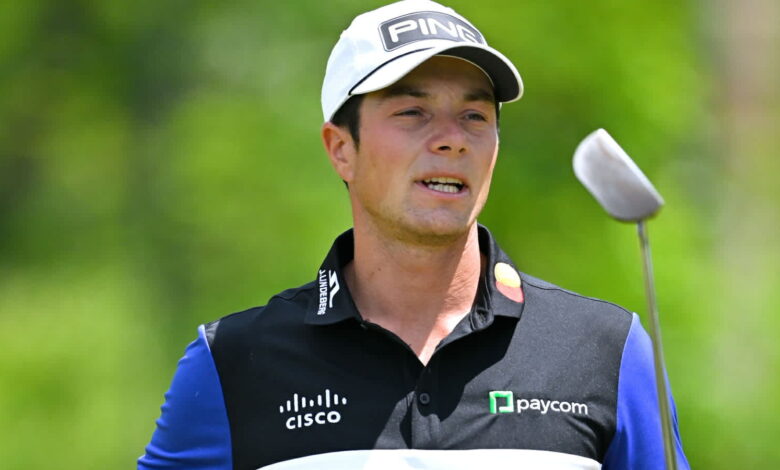
Viktor Hovland has long been celebrated for his laser-like ball-striking, cool composure under pressure, and a swing that once seemed effortless. But as 2026 unfolds, the Norwegian star is opening up in raw, unfiltered terms about the lingering effects of his 2025 neck injury—a setback that’s not just physical but deeply personal, robbing him of the freedom and trust that define elite golf.
The saga traces back to mid-2025. A sudden crack on the range at the Travelers Championship forced an abrupt withdrawal after just two holes in the final round. Hovland described the moment vividly: he warmed up feeling great, but one driver swing triggered sharp pain, leaving him unable to move his neck freely or even stand comfortably over the ball. What followed was a recurring battle with a bulging disc in his neck, flaring up on and off for months. It peaked dramatically at the Ryder Cup at Bethpage Black, where he re-aggravated the issue during Saturday’s Four-ball, took painkillers mid-round, and ultimately withdrew from his Sunday singles match against Harris English. The rare envelope rule was invoked, halving the match and drawing controversy, but Hovland’s focus was on the emotional toll: he called it pretty upsetting, feeling he let down his team and his opponent.



Recovery involved real sacrifice—time off with no club in hand, careful testing rounds, limited driver use (the club that caused the most pain due to its speed and torque), and protective swing adjustments. He returned cautiously on the DP World Tour late in 2025, posting solid but guarded results while prioritizing health over aggression.
Fast-forward to early 2026, and Hovland’s honesty cuts deeper. In a candid interview following a recent event, he confessed: “No complaints but still doesn’t feel like I can swing loosely.” That single line—“I still don’t feel loose”—captures the heart of what’s holding him back. It’s not just residual stiffness or pain; it’s the loss of that effortless, athletic flow he once took for granted. The neck issue has left him tentative, unable to fully commit to aggressive swings without fear of re-aggravation. For a player whose game thrives on rhythm, rotation, and unrestricted power, this feels profoundly personal—like part of his identity as a golfer has been muted.
Hovland has been working diligently with his team to rebuild. Swing tweaks aim to reduce strain while regaining feel, but the process is gradual. He’s admitted the injury forced him to rethink mechanics, sometimes limiting explosiveness to protect the area. Yet his resilience shines through: he’s competing, grinding through rounds, and refusing to let the setback define him. The confession isn’t defeatist—it’s vulnerable, a window into the mental side of recovery that fans rarely see. It’s about rebuilding trust in his body, one swing at a time, amid the pressure of expectations and the solitude of rehab.
This raw admission resonates because it’s relatable beyond golf. Elite athletes often project invincibility, but Hovland’s words reveal the human struggle: the frustration of not feeling loose, the quiet battle to reclaim freedom of movement, and the personal cost when something so core to who you are gets taken away, even temporarily.
As Hovland continues his comeback in 2026, chasing that elusive looseness, his journey reminds us why we root for athletes like him. It’s not just about wins—it’s about the grit to confront vulnerability head-on. When he finally feels that freedom return, the cheers will be louder than ever. Until then, his honesty makes every step forward worth celebrating. Viktor Hovland isn’t just fighting an injury; he’s fighting to feel like himself again—and that’s a story worth cheering for non-stop.