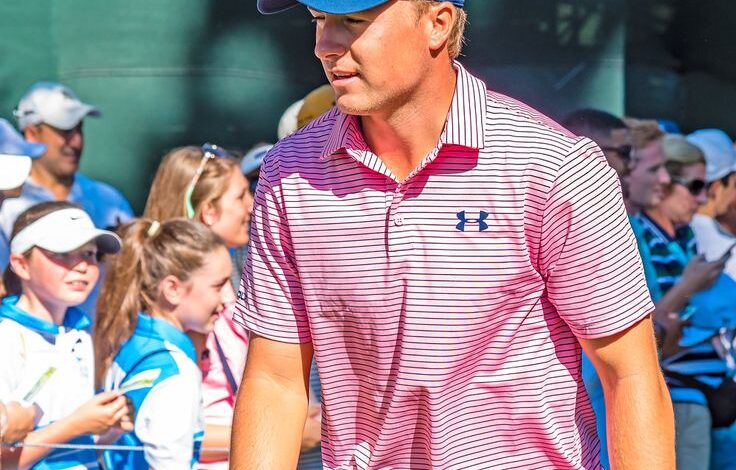
Amid the turquoise waters and balmy breezes of Albany Golf Club, Jordan Spieth stepped into the spotlight not as the prodigy who once chased down majors with the ferocity of a Texas storm, but as a golfer reborn—scarred, resilient, and ready. At the Hero World Challenge, the unofficial kickoff to the PGA Tour offseason, the 32-year-old Texan sat down with reporters on the eve of the event, his words carrying the weight of two injury-plagued years. “I’m very healthy,” he declared, a quiet fire in his eyes. “I’m stronger than I’ve been in a long time.” It was the update fans had been craving, a beacon after a 2025 season that tested his body, his swing, and his unshakeable spirit.
Spieth’s journey back to form hasn’t been a straight drive down the fairway. It began in the shadows of The Open Championship in July 2024, where on the 18th hole at Royal Troon, disaster struck in the most innocuous way. A tendon in his left wrist—the extensor carpi ulnaris—popped out of its sheath mid-swing. “I got it back in before I hit my tee shot,” he later recounted to CBS broadcaster Jim Nantz, a wry smile masking the gravity. “And that’s when I thought, maybe that’s the last straw. Maybe we should probably do something about this. I don’t really feel like playing like this anymore.” What followed was surgery in the fall of 2024, sidelining him for the second half of that season and robbing him of the precious offseason prep that pros guard like a guarded green.


His return in January 2025 at the AT&T Pebble Beach Pro-Am marked the longest competitive layoff of his career—nearly five months. “No pain” during therapy sessions offered early hope, but persistent swelling lingered through the summer, a stubborn reminder that elite golf demands more than grit; it requires precision engineering of the human frame. The year unfolded like a bogey-strewn round: flashes of brilliance, like a T14 at The Masters where his short game evoked ghosts of 2015, undercut by setbacks. In June, at the Travelers Championship—a Signature Event he’d won in 2017—Spieth’s body rebelled again. A random spasm locked up his back and neck during warm-ups, forcing his first career withdrawal after just 13 holes. “Everything was great in my gym session,” he said post-round, frustration etching his face. “I’ve been very, very excited to go out and play.” It was a gut punch, especially with a baby due at home and FedExCup points dangling like a carrot just out of reach.
The toll showed in the standings. Finishing T38 at the FedEx St. Jude Championship in August, Spieth ended the playoffs at No. 54, slipping to No. 61 by the FedExCup Fall’s close—outside the top 50 that guarantees Signature Event spots in 2026. He leaned on sponsor exemptions for six of those elevated fields this year, a crutch he chafed against. “It’s sucked the last couple years,” he admitted in Nassau. “I don’t want to use exemptions. I don’t want to ever have to use that again. I want to work my way into events.” Neck and back twinges compounded the wrist woes, turning what should have been a redemption arc into a grind. Yet, even in the valleys, Spieth’s wry humor surfaced—like playing the first two rounds of the Hero with a cracked face on his Titleist TSR2 driver, a mishap revealed mid-tournament that somehow mirrored his season’s cruel twists.
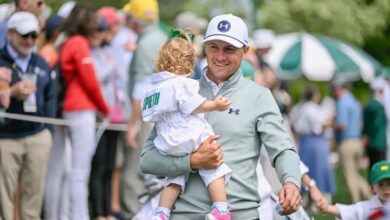
But here’s where the story pivots from lament to launchpad. This offseason, unburdened by last winter’s cast, Spieth has attacked his recovery with the intensity that once netted him the Masters, U.S. Open, and Open Championship by age 21. “Last offseason, I was in a cast after surgery, and this offseason, I really didn’t take much time off after the season ended,” he explained. Good weather in Dallas has allowed endless range sessions, gym work, and family time with wife Annie and their growing brood—their second child arriving amid the Travelers chaos. Collaborating with longtime coach Cameron McCormick, Spieth is rebuilding “the structural integrity of my swing,” purging bad habits born of compensation. “I’ve gone through phases with it, but this is a good trial run,” he said of the Hero, where a third-round 70—his best of the week—hinted at the old magic. “Test it out here this week and if I finish first or 20th, as long as I’m sticking with what I’m working on, then I’ll be making progress.”
Looking ahead, Spieth is mapping a 2026 blueprint that’s equal parts ambition and pragmatism. He plans to “hit the ground running,” opening at the Sony Open in Hawaii and piling on West Coast starts to rack up points early. “I’ve been off for so long. Probably play a lot on the West Coast,” he said, eyeing a schedule that rebuilds momentum without exemptions. The ninth Signature Event added to next year’s calendar has stirred debate, but for Spieth, it’s fuel: climb back into the top 50, secure those automatic berths, and chase the career Grand Slam that eludes him—the PGA Championship. “Next year’s going to be a really good year for me,” he predicted in July, a sentiment echoing stronger now. “I can feel it.”
The golf world watches with bated breath. Spieth, the boy wonder who captivated with his left-handed putting and unflappable putting prowess, has evolved into a man who knows vulnerability isn’t defeat—it’s the setup for the comeback birdie. At Albany, even as Tiger Woods—another warrior of the will—hinted at his own cautious return, Spieth’s optimism cut through. “I feel healthy,” he reiterated. Stronger, steadier, and swinging free. As 2026 dawns, the PGA Tour braces for the return of its most electric storyteller. Not with pity, but with the promise of pars turned eagles, and a wrist that finally knows no bounds. In golf, as in life, the best shots often follow the deepest divots. Jordan Spieth is proof.