
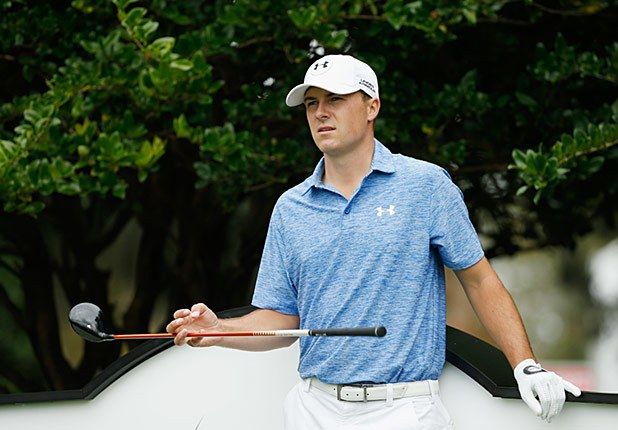
Jordan Spieth, the three-time major champion and former World No. 1, has endured a prolonged battle with a nagging wrist injury that dates back to late 2017. The issue, stemming from offseason training, persisted through years of management, avoidance of surgery, and eventual procedures—culminating in wrist surgery before the 2025 season. Recovery proved challenging: limited time to retrain muscle memory, scar tissue buildup, and subconscious swing adjustments hampered his ability to perform at his peak. Despite flashes of brilliance, Spieth’s results in recent seasons fell short of expectations, leaving him outside the elite ranks and reliant on sponsor exemptions at times.
Entering 2026, however, Spieth is sounding a note of genuine optimism. After a full, unencumbered offseason focused on rebuilding his swing mechanics—particularly getting his hands into a deeper position at the end of the backswing, a feel reminiscent of his dominant periods—he reports significant progress. In interviews ahead of and during the Sony Open in Hawaii, his season debut, Spieth revealed the breakthrough that has eluded him for so long.



The key revelation? He can finally position the club consistently where he wants it—something that had been missing from his game for years due to the physical limitations and compensatory moves forced by the wrist.
“It’s been really fun to work on, because once the feel, the real, and the performance matches, it’s like man, I know great things are coming,” Spieth said. “It’s just been a long time since I’ve been able to position the club this way. I’m not doing it every time, but I know how to do it and I’m doing it some.”
This ability to control club placement without subconscious fear or restriction marks a pivotal shift. For a player whose success has always hinged on creativity, touch, and precision—traits that powered his 2015 Masters and U.S. Open triumphs—this return to “normal” swing freedom is profound. He described the process as aligning feel with execution in a way that hadn’t happened consistently in nearly a decade.
“I haven’t swung it well for the better part of 10 years, which is wild,” Spieth acknowledged earlier in the offseason. “I shouldn’t have any excuses not to be better.”
The progress showed early signs at the Sony Open, where he noted improvements in hand path and outward focus during tournament play. While not yet flawless, the consistency in positioning the club has allowed him to be more present and less mechanical, reducing the mental grind that defined recent years.
Spieth’s honesty about the journey—acknowledging the “grind” of the past couple of seasons while expressing excitement for what’s ahead—highlights his resilience. At 32, he remains hungry to reclaim his spot among the game’s best, chase another major, and complete the career Grand Slam. This newfound capability isn’t just technical; it’s a mental reset, freeing him to enjoy the process again.
As Spieth builds on this foundation through the 2026 PGA Tour season, fans have reason for renewed hope. The player who once dominated with fearless shot-making appears ready to do so once more—finally unburdened by the one thing that held him back for far too long. Great things, as he puts it, may indeed be coming.