
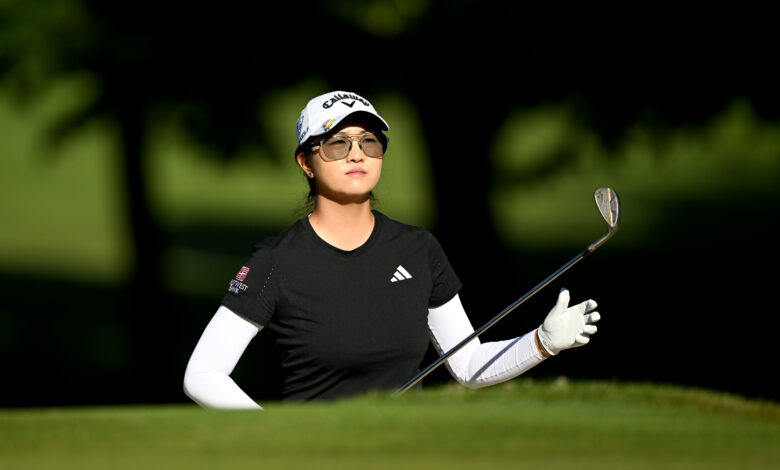
Rose Zhang’s ascent to the pinnacle of amateur golf is a story of extraordinary talent and unrelenting dedication. For a record-breaking 141 weeks, she held the top spot in the World Amateur Golf Ranking, surpassing legends like Lydia Ko and Leona Maguire. She claimed major amateur titles, including the U.S. Women’s Amateur, and dominated college golf at Stanford, winning 12 tournaments in just 20 starts—more than Tiger Woods achieved in his collegiate career. Yet behind the trophies and records lies a quieter narrative: the personal sacrifices that fueled her rise.
Zhang discovered golf at age nine, when a family friend gifted clubs to her father, Haibin Zhang. What began as curiosity quickly evolved into obsession. Her parents, Chinese immigrants who had moved to California seeking better opportunities, poured everything into supporting her dream. Haibin quit his job to focus on her training, often rising at 4 a.m. to balance work and family before fully committing. Her mother, Li Cai, worked long hours at a dental manufacturing company while providing unwavering emotional support, becoming what Zhang calls the “rock” of the family.



These family sacrifices set the foundation, but Zhang’s own burdens were profound. As a teenager, she traded the hallmarks of a normal adolescence for endless hours on the range. Social outings, parties, and casual downtime gave way to rigorous practice sessions—hitting hundreds of balls daily, even using plastic bottle caps in her backyard to avoid breaking windows. “Juggling the grind of junior golf with academic responsibilities and being a normal social teenager is not an easy thing to navigate,” she once reflected. Travel for tournaments meant missing school events and friendships, while the pressure to perform isolated her further.
The intensity only grew. Coaches and family urged her to ease up on practice, yet she pushed through injuries and exhaustion. Golf became more than a sport—it shaped her entire identity during her formative years. “Golf was very much a whole identity of mine, and I was not that satisfied about it,” she later admitted. The relentless schedule of competitions, travel, and expectations left little room for self-discovery outside the fairways.
Even as she turned professional in 2023—winning in her debut LPGA event—Zhang chose an unconventional path that extended her sacrifices. Influenced by Michelle Wie West, she committed to finishing her degree at Stanford while competing on tour. This meant limited tournament appearances, frequent breaks for classes, and a hectic balance that contributed to injuries and inconsistent results. “The last three years have been a little bit hectic,” she has said, acknowledging the mental and physical toll.
Zhang’s story is one of triumph, but it’s also a reminder of the unseen costs. The silent burden—missed milestones, family upheavals, and a childhood redefined by discipline—propelled her to No. 1. In embracing these trade-offs, she not only redefined excellence in women’s golf but also carved a path toward a more balanced life, proving that true greatness often demands the most personal price.