Viktor Hovland Admits He Faced Difficulties That Scottie Scheffler & Other Golfers Never Experienced in Their Careers

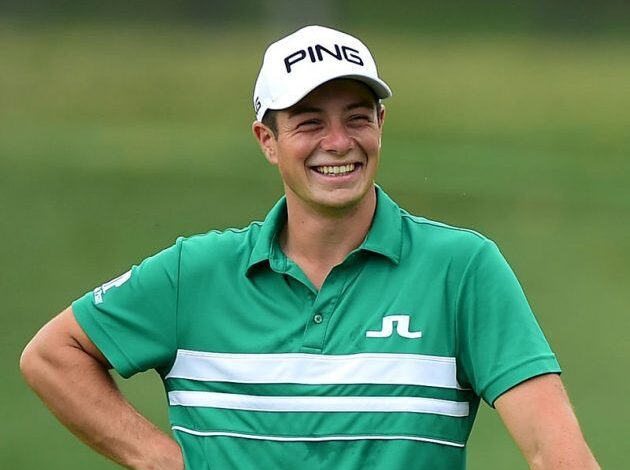
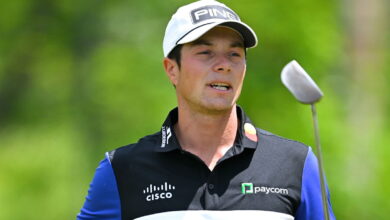
In the high-stakes world of professional golf, where precision meets perseverance, few stories capture the raw essence of the sport like that of Viktor Hovland. The 28-year-old Norwegian sensation, who burst onto the PGA Tour scene as a prodigy and climbed to world No. 4 by the end of 2023, has long been hailed as one of the game’s brightest young talents. With seven PGA Tour victories under his belt—including a dramatic FedEx Cup triumph—and a pivotal role in Europe’s 2023 Ryder Cup dominance, Hovland’s trajectory seemed unstoppable. Yet, in a candid revelation during a recent appearance on the *Flag Hunters Podcast*, the Oslo native peeled back the layers of his success to expose the unique hardships that shaped it. These weren’t the typical slumps or swing tweaks that plague every pro; they were foundational barriers—geographic, cultural, and logistical—that American stars like Scottie Scheffler and his contemporaries never had to navigate.
Hovland’s admission cuts to the heart of golf’s global inequality: the vast chasm between growing up in a golfing powerhouse like the United States and emerging from a country where the sport is as much a novelty as a national pursuit. “We have no reference or no context growing up in Norway,” Hovland confessed, his voice carrying the weight of isolation felt by a teenager swinging clubs in subzero winters. Unlike Scheffler, who honed his game amid Texas’s sun-baked fairways and endless junior circuits, Hovland’s path was forged in scarcity. Norway boasts fewer than 150 golf courses for its 5.5 million residents—a stark contrast to the U.S., where over 16,000 dot the landscape, fostering a pipeline of talent that churns out phenoms with alarming regularity.


Scheffler’s story is the American dream distilled into drives and putts. Raised in Dallas-Fort Worth, a region dubbed golf’s “Silicon Valley” for its density of elite academies and pros, he joined the junior program at Royal Oaks Country Club at age seven. There, under the tutelage of Texas Golf Hall of Famer Randy Smith, Scheffler didn’t just practice; he competed. Regular short-game battles against PGA Tour veterans like Justin Leonard and Ryan Palmer sharpened his edge long before college. This ecosystem—replete with year-round play, top-tier coaching, and peerless competition—propelled him to world No. 1 status, Olympic gold in 2024, and major triumphs at the PGA Championship and Open Championship in 2025. His career earnings hover near $88 million, a testament to the seamless support structure that American golfers inherit like a birthright.
Hovland, by comparison, started golf at 11, inspired by his engineer father who picked up the game during a stint in St. Louis. Back home, winters meant indoor simulators or snow-dusted ranges, with the outdoor season squeezed into a fleeting summer window. “I’d play so far above my level to even have a chance,” he recalled of his early PGA Tour forays, where the lack of high-caliber domestic rivals left him underprepared for the tour’s intensity. At 16, he claimed the Norwegian Amateur Championship, but international exposure was a grind—flights to distant qualifiers, makeshift training regimens, and the constant doubt of being a pioneer in a nation with just one prior PGA Tour winner (Kristoffer Broberg, in 2015). Hovland’s breakthrough came via the 2018 U.S. Amateur title and a meteoric rise at Oklahoma State, but those early deficits lingered, manifesting in the “impostor syndrome” he described on the podcast.
This developmental gap isn’t abstract; it’s etched in Hovland’s career arc. While Scheffler amassed seven PGA Tour wins in 2024 alone, Hovland’s 2024 was a tale of tinkering and turmoil. A self-admitted “rabbit hole” of swing changes—adding draw bias to combat his natural cut, only to overcorrect—led to missed cuts and a world ranking dip to No. 11. Injuries compounded the narrative: a broken toe sidelined him briefly at the 2025 Sentry, and a bulging disc in his neck forced him out of Ryder Cup singles at Bethpage Black, invoking the rare “envelope rule” for a forfeit. Even in triumph, like his 2025 Valspar Championship victory after an 18-month drought, Hovland spoke of battling “self-doubt” that peers like Scheffler sidestep through innate consistency. “Scottie isn’t hunting for perfection like I have,” noted analysts Brendon de Jonge and Johnson Wagner post-Valspar, highlighting how Scheffler’s grounded mental game—rooted in that fertile U.S. soil—allows him to “just play” without the existential overhauls Hovland endures.
Yet, Hovland’s candor isn’t defeatist; it’s defiant. He views his suboptimal origins as a forge, not a fetter. “I feel like the way I became good at golf was having something suboptimal that I had to play with,” he shared at the 2025 U.S. Open, echoing a philosophy that propelled him to low-amateur honors at the 2019 Masters and a 9&7 Ryder Cup thrashing of Scheffler and Brooks Koepka alongside Ludvig Åberg. Recent X posts from Hovland trackers paint a picture of resilience: strong short-game showings at the Nedbank Challenge despite putting woes, and a focused driver rebuild in Dubai where he quipped, “Sh-t happens… It’s hard to play golf 20 years great.” His split with swing coach Joe Mayo in late 2024 underscores this evolution—treating coaches as “resources,” not crutches, in a bid to reclaim the relentless form that saw him edge Scheffler at the 2022 Hero World Challenge.
Hovland’s story resonates beyond the fairways, challenging golf’s gatekeepers to bridge the global divide. Initiatives like the PGA Tour’s international pathways and Europe’s expanded junior programs offer glimmers of hope, but for now, trailblazers like Hovland—and fellow Scandinavians Åberg and Nicolai Højgaard—bear the brunt. As he eyes 2026 majors, Hovland’s admission serves as both warning and inspiration: True greatness isn’t handed down from well-funded academies; it’s clawed from the cold, uncharted edges of the world. In a sport where Scheffler’s poise feels predestined, Hovland’s grit is a reminder that the most unbreakable swings are those tempered in adversity. For the Norwegian, the difficulties weren’t detours—they were the very map to mastery.