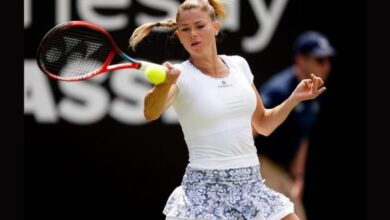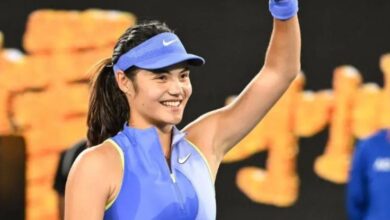
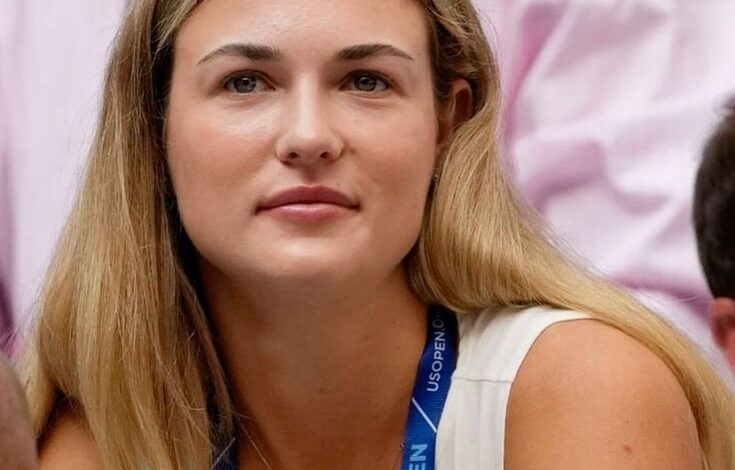
The Kallang Tennis Hub pulsed with a different kind of energy on a humid January evening in 2025, one that went beyond the baseline rallies and baseline grunts. As Anna Kalinskaya collapsed to her knees after clinching a gritty 6-4, 4-6, 6-2 quarterfinal victory over Thailand’s Mananchaya Sawangkaew, the crowd’s roar gave way to something softer: a collective hush broken only by her sobs. The 26-year-old Russian, her face a mask of sweat and salt-streaked tears, pumped her fist toward the stands before burying her head in her towel. It wasn’t just a win; it was a release—a raw, unfiltered outpouring that has tennis Twitter ablaze and fans worldwide rooting for the underdog who’s suddenly the sport’s most compelling narrative.
Kalinskaya’s path to that moment was paved with more thorns than triumphs early in the year. The 2024 season had been her breakout: a career-high No. 11 ranking, finals in Dubai and Berlin, and a quarterfinal run at the Australian Open that turned heads. Dating world No. 1 Jannik Sinner added a glossy tabloid sheen, but it was her game—fierce forehands and unflinching fight—that earned respect. Then came 2025’s rude awakening. A virus sidelined her from the Australian Open just hours before her opener, erasing a chance to defend those hard-earned points. Follow-up losses in Brisbane and a retirement in Adelaide due to illness left her 0-2, her confidence as frayed as a well-worn racket string. “I felt like I was starting from zero,” she later admitted in a post-match interview, her voice still thick with emotion. “Every practice, every hit—it was like rebuilding a house after a storm.”

Enter the Singapore Tennis Open, the WTA’s inaugural 250-level event at the gleaming new Kallang hub, a three-year fixture breathing fresh life into Asia’s calendar. As top seed and World No. 14, Kalinskaya arrived not as a favorite, but as a fighter reclaiming her fire. Her first-round clash with Caroline Dolehide was a microcosm of the struggle: a medical timeout for a nagging lower-back issue in the second set, a code violation for smashing her racket in frustration after dropping it. The American clawed to a set apiece, but Kalinskaya dug deep, storming the decider 6-2 with serves topping 110 mph and groundstrokes that screamed defiance. “I was angry at myself, at the pain,” she confessed courtside, dabbing her eyes. “But I thought of everyone watching back home, and I couldn’t quit.”
The buzz built from there. A straight-sets takedown of qualifier Simona Waltert in the Round of 16 showcased vintage Kalinskaya—aggressive returns and net-rushing poise that evoked her 2024 peak. By the quarters against Sawangkaew, the stakes felt personal. Down a break early, Kalinskaya mounted a comeback fueled by sheer will, saving three set points in the opener before unleashing a tiebreak masterclass. The decider was hers in a blink, but victory arrived with a flood. As she knelt, tears flowing freely, the arena erupted. Commentators called it “the cry of the comeback queen,” and social media lit up: #KalinskayaTears trended globally, with fans posting montages of her journey set to swelling anthems. “Seeing her break down like that… it’s what makes tennis human,” one viral tweet read, racking up 50,000 likes overnight.
What elevated this from a feel-good win to a full-blown phenomenon? The emotion, raw and relatable. In a sport often critiqued for its stoicism—players like Iga Świątek or Coco Gauff masking inner turmoil behind baseline fortitude—Kalinskaya’s vulnerability was a revelation. “Tennis is lonely,” she told reporters the next day, her eyes still puffy. “You train alone, travel alone, doubt alone. But moments like this? They remind you why you fight.” Her semifinal retirement against Ann Li due to a thigh strain—a fresh injury that forced her off after just one set—only amplified the narrative. Handing out signed towels to ball kids through gritted teeth, she waved to the crowd one last time, whispering “I’ll be back stronger.” It was a cliffhanger that had fans clamoring for more, turning a mid-tier 250 into must-watch drama.
Off-court, the story resonated deeper. Kalinskaya’s openness about mental hurdles—echoing her 2024 admissions of anxiety during Sinner’s doping saga—struck a chord in an era of athlete advocacy. Vogue Singapore caught her in a reflective mood pre-tournament, where she gushed about the “special feeling” of crowd energy, crediting her badminton-playing parents for instilling resilience. And then there’s the Sinner factor: his fresh Australian Open defense in Melbourne had fans shipping the couple’s parallel ascents, with memes dubbing her “the queen who cried for her crown.” Yet Kalinskaya downplayed the romance, focusing on self: “Jannik’s my rock, but this win? That’s mine.”
As Singapore wrapped—Li falling in the final to a resurgent Emma Raducanu—Kalinskaya jetted to her next stop, a quarterfinal seed at the Washington Open waiting. Her 2025 ledger now boasts a semifinal deep run, five quarterfinals including a WTA 1000 in Cincinnati, and a runner-up finish in D.C. later that summer. But it’s that tear-streaked kneel in Kallang that’s etched in memory, a snapshot of triumph born from the brink. Everyone’s talking about Anna Kalinskaya because she didn’t just come back—she bared her soul doing it. In a game of perfect strokes and poker faces, her messy, magnificent humanity is the real ace. And as she eyes 2026 with a No. 33 ranking and unfinished business, one thing’s clear: the tears were just the beginning.