
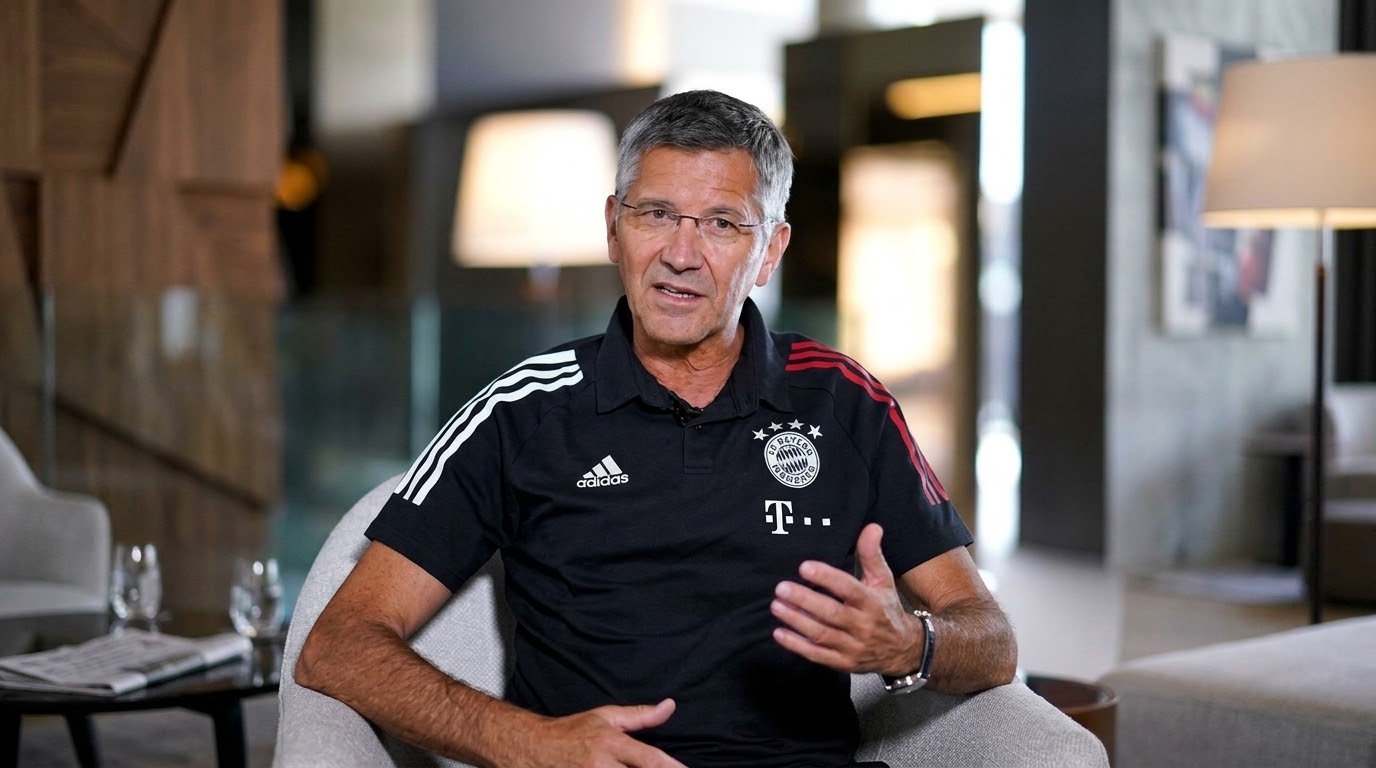
BAYERN MUNICH CHIEF FIRES SHOTS AT LIVERPOOL! ULI HOENESS CLAIMS THIS RED WOULD PLAY MUCH BETTER IN GERMANY AS DEATH-THREAT REVELATIONS SPARK CONCERN!
Bayern Munich honorary president Uli Hoeness has delivered a bold assessment of Liverpool winger Luis Díaz, declaring that the Colombian would play at a significantly higher level at Bayern Munich than he currently does at Anfield.
Hoeness stated that Díaz possesses the quality to thrive in a system that places him at the centre of the attacking structure rather than treating him as one option among several. He directly questioned Andoni Iraola’s handling of the player, arguing that the Liverpool manager has failed to build the team around Díaz’s strengths and has instead allowed him to become “one of many” in a crowded forward line. The comments have intensified discussion about the winger’s role, his current environment, and his long-term future.
Hoeness’s intervention carries the weight of a figure who has shaped Bayern Munich’s identity for decades. When he singles out a Premier League player and claims he would perform at a higher standard in Germany, the football world pays attention. His argument rests on a clear premise: Díaz’s explosive pace, direct dribbling and ability to isolate defenders are best served by a tactical setup that maximises those attributes rather than diluting them within a more collective or rotational approach.
At Liverpool, Díaz has produced moments of outstanding quality. His capacity to beat full-backs, stretch defences and create chaos in the final third remains evident. Yet Hoeness believes those moments occur less frequently than they should because the system does not consistently prioritise him. The honorary president’s view is that a club like Bayern would construct attacking patterns that feed Díaz early and often, turning his individual brilliance into a permanent tactical focal point.
The criticism of Iraola is explicit. Hoeness suggests the Liverpool manager has not done enough to integrate the winger as a central figure. In his assessment, Díaz has been asked to adapt to a broader collective structure instead of the structure being adapted to amplify his unique strengths. The result, according to Hoeness, is a player operating below the ceiling of his ability. At Bayern, the expectation would be different. The team would be built to get the ball to Díaz in dangerous areas as often as possible.
The situation has been further complicated by Díaz’s own revelations about receiving death threats. The winger has spoken about the personal toll of those threats and the impact on his focus and well-being. The disclosures have added a serious and human dimension to the debate about his future. Playing under that kind of external pressure while also navigating questions about his tactical role creates a difficult environment. Hoeness’s comments land in the middle of that sensitive context.
Liverpool’s position remains clear in public. The club values Díaz as an important member of the squad and sees him as part of the long-term attacking group. Iraola has previously praised the winger’s work rate, versatility and ability to influence matches from the left side. Yet the gap between that internal valuation and Hoeness’s external assessment has created a narrative of under-utilisation that supporters and observers are now examining more closely.
Díaz’s style of play is built on aggression, unpredictability and the willingness to take risks in one-v-one situations. Those traits flourish when a player knows the system is designed to isolate him against defenders and support his runs with intelligent occupation of space. When the team structure prioritises other patterns, the same player can appear less decisive even while working at full intensity. Hoeness believes Bayern’s approach would remove those constraints and allow Díaz to operate closer to his maximum output.
The death-threat revelations have understandably drawn strong reactions. No player should have to deal with that level of personal hostility. The fact that Díaz has felt compelled to speak about it publicly underlines the severity of the issue. It also raises legitimate questions about the wider environment surrounding high-profile footballers and the support structures available to them. Liverpool have a responsibility to protect their players, and the club’s response to the threats will be watched closely.
Bayern Munich’s interest in elite attackers is constant. Hoeness’s public praise functions as both genuine admiration and a form of soft pressure. By stating that Díaz would play much better in Munich, he plants the idea that a move to the Bundesliga champions would unlock a higher version of the player. Whether that idea develops into concrete interest remains to be seen, but the door has been opened in a very public manner.
Inside Anfield the comments will not go unnoticed. Managers prefer to handle tactical integration and player roles without external commentary from rival clubs. Iraola must now deal with the perception that one of his key attackers is being under-used, even if he disputes that reading of the situation. The narrative has been set by a high-profile figure and will require either performances that silence the discussion or a clear demonstration that Díaz remains central to Liverpool’s plans.
Supporters find themselves navigating competing emotions. Many recognise Díaz’s quality and want to see him influence matches as often as possible. Others trust the manager’s collective approach and believe the team’s structure should not be altered for any single player. The death-threat element adds a layer of concern that transcends tactics. Fans want the player to feel safe and supported while continuing to produce the moments of brilliance that made him a favourite.
The coming weeks will clarify the practical impact of Hoeness’s intervention. If Díaz delivers a series of dominant performances, the debate may fade. If his role remains rotational or secondary in key matches, the suggestion that he would thrive in a more tailored system will gain further traction. Bayern, for their part, will continue to monitor the situation with interest.
Luis Díaz remains a high-class performer with the capacity to decide major matches. Uli Hoeness has stated without reservation that those capacities would be realised more fully at Bayern Munich. He has questioned the current tactical integration at Liverpool and placed the winger’s situation under a brighter spotlight at a moment when personal security concerns are already present. The combination has created one of the more compelling narratives around a Premier League player this season.
Liverpool must now respond on the pitch and in their management of the player. Díaz must continue to focus on his performances while dealing with external noise and personal pressure. And Bayern Munich have made clear, through one of their most influential voices, that they see a higher ceiling for the Colombian in a different environment. The discussion is no longer theoretical. It is public, pointed, and ongoing.