
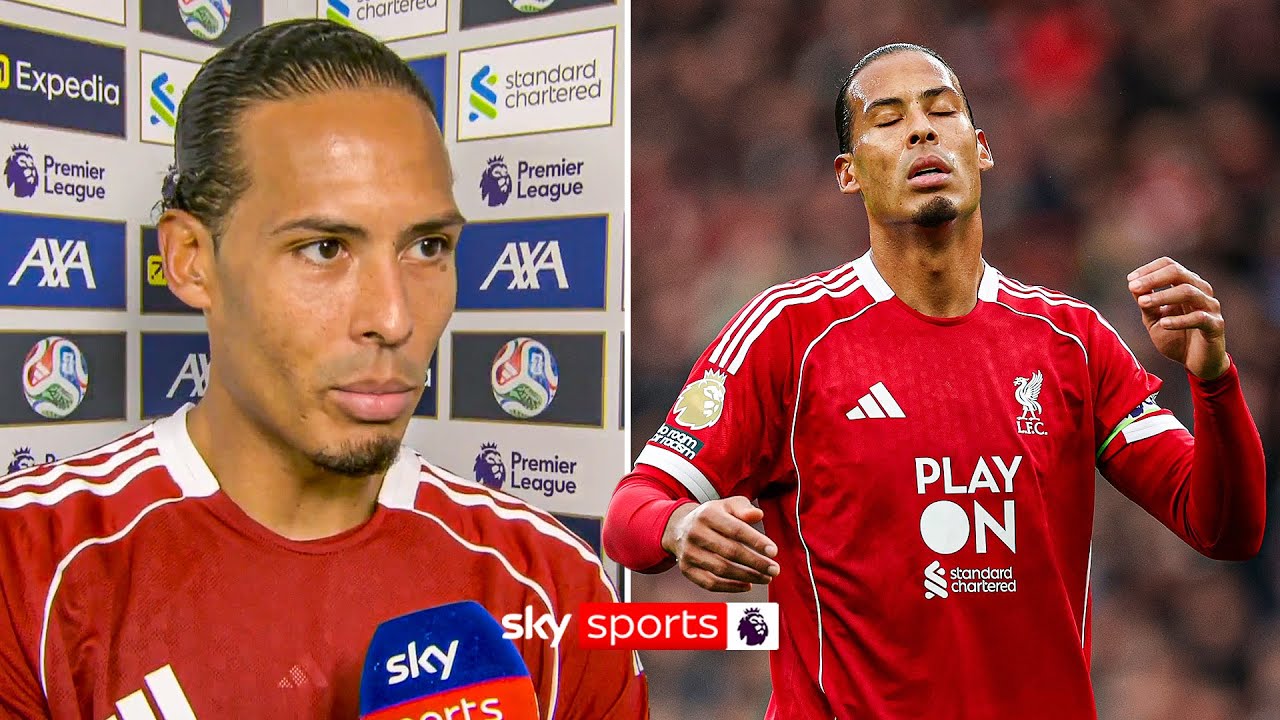
VAN DIJK QUESTIONS LIVERPOOL’S RISKY BUILD-UP AFTER COSTLY MISTAKE!
Virgil van Dijk has delivered a brutal verdict on Liverpool’s decision to play out from the back against Arsenal. The Liverpool captain admitted he had warned the coach that his teammate was not confident enough to handle Arsenal’s pressure, but the decision was made anyway — and it proved costly when Liverpool went 1–0 down.
Van Dijk stated: “I don’t understand why we still choose to play out from the back when he is in this team. I spoke to the coach and told him we couldn’t do it because he isn’t confident and good enough to control the pressure. But he still took the chance, and we went 1–0 down. These are the moments in a match that change everything.”
The Dutch defender has made his frustration clear. In a high-intensity fixture against Arsenal, Liverpool’s commitment to building from the back exposed a vulnerability that Van Dijk had already identified. He raised the concern directly with the coaching staff before the match, stressing that the teammate in question lacked the confidence and composure required to deal with Arsenal’s aggressive press. The warning went unheeded.
The consequence arrived early. Under pressure, the risky build-up broke down and Arsenal capitalised to take the lead. Van Dijk views that moment as decisive. In matches of this magnitude, a single error in possession in dangerous areas can shift momentum, confidence and ultimately the result. He believes the goal was avoidable and stemmed from a tactical choice that ignored clear evidence.
Van Dijk’s comments strike at the heart of a recurring debate within modern football. Playing out from the back is a core principle for many top sides, designed to draw opponents forward and create overloads higher up the pitch. Yet it demands absolute technical security and mental composure under intense pressure. When those qualities are missing in a key player, the strategy becomes a liability rather than an asset.
The Liverpool captain’s willingness to speak so openly underlines the strength of his conviction. As a leader on the pitch and a central figure in the defensive structure, Van Dijk sees the risks more clearly than most. His intervention before the game shows he was not prepared to remain silent when he believed the approach was flawed. The fact that the error then occurred only reinforces his original assessment.
Inside the dressing room the remarks will carry significant weight. Teammates and staff now know the captain had flagged the danger and been overruled. That knowledge can sharpen future discussions about when to persist with short build-up and when to adopt a more direct solution against high-pressing opponents.
Arsenal’s pressing game is among the most coordinated in the Premier League. Their forwards and midfielders work in tandem to close passing lanes and force mistakes. Van Dijk recognised that the specific teammate involved was not equipped to handle that intensity on the day. Continuing with the strategy anyway handed Arsenal the opening they needed.
The goal changed the complexion of the contest. Liverpool were forced to chase the game, altering their rhythm and allowing Arsenal to defend in a more organised block. Van Dijk’s point is straightforward: moments of unnecessary risk at the back can undo carefully laid plans and place the team on the back foot against elite opposition.
Supporters will share the sense of frustration. Watching a preventable error lead to a goal in a major fixture inevitably raises questions about decision-making and player selection within the build-up structure. Van Dijk has given those questions a clear public voice.
The captain’s focus remains on accountability and learning. He is not rejecting the principle of playing out from the back in every circumstance. He is rejecting its use when the personnel on the pitch are not suited to executing it under pressure. That distinction is important. Tactical flexibility, in his view, must include the willingness to adapt when the risk outweighs the reward.
Liverpool’s coaching staff will now have to address the issue directly. A public difference of opinion between the captain and the tactical approach cannot be left unresolved. Future matches against pressing sides will bring the same question into focus: when does the commitment to short build-up become a gamble the team cannot afford?
Virgil van Dijk has drawn a clear line. He warned that the teammate was not confident or capable enough to handle Arsenal’s pressure. The decision to proceed anyway led to a costly goal. These are the moments, he insists, that change matches. The Liverpool captain has spoken with clarity and authority. The club must now decide how to respond.