
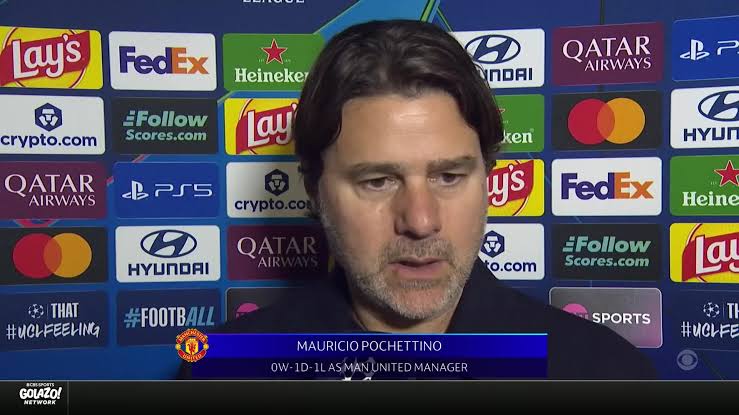
Mauricio Pochettino has broken his usual restraint in spectacular fashion. Following Manchester United’s controversial 2-2 draw against Sporting CP, the United manager has launched a furious attack on the referee, insisting his side were robbed and that the standard of officiating was absolutely disgraceful. In comments that have already ignited debate across the football world, Pochettino claimed every significant 50/50 challenge went against his team and that his players were treated as if they were not even competing on the same pitch. The Argentine went further still, suggesting the referee’s licence should be revoked. 😤
“We were robbed! Every challenge went against us. The referee should never be allowed to officiate another game!” Pochettino is reported to have said, underlining the depth of his anger in the aftermath of a result that left United feeling deeply aggrieved.
The 2-2 scoreline itself told only part of the story. What unfolded around the key decisions has now become the dominant narrative, with the United manager refusing to stay silent.
A Rare Public Outburst
Pochettino has built a reputation as a coach who generally avoids prolonged public criticism of officials. That context makes the strength of his latest comments all the more striking. By stating that he rarely criticises referees but could not let yesterday’s performance pass, he framed the outburst as an exception driven by genuine injustice rather than routine frustration.
According to those present, the manager’s post-match demeanour left little doubt about his feelings. The sense of injustice was raw. In his view, United’s hard work, organisation and moments of quality were repeatedly undermined by decisions that consistently favoured the opposition. The cumulative effect, he argued, was that a game his side had done enough to win was allowed to slip into a draw that felt unearned.
The claim that every 50/50 challenge went against United is particularly damning. It suggests not isolated errors but a sustained pattern that tilted the contest. When a manager of Pochettino’s experience reaches that conclusion, the scrutiny on the officials intensifies immediately.
“Treated as Though They Weren’t Even Playing on the Same Pitch”
One of the most cutting lines attributed to Pochettino was the suggestion that his players were treated as if they were not competing on equal terms. That accusation goes beyond individual calls and questions the fundamental fairness of the contest. In high-stakes European nights, the perception of even-handedness is critical. When that perception collapses, the emotional response from the dugout is often fierce.
United players are understood to have shared their manager’s frustration. Several key moments — challenges in midfield, aerial duels, and decisions in both penalty areas — were viewed inside the visiting camp as clear errors that disrupted momentum and handed Sporting unnecessary encouragement. The equaliser, in particular, is said to have been greeted with disbelief on the United bench after earlier decisions had already raised tensions.
Pochettino’s willingness to state that the referee should never officiate another game elevates the criticism to an extreme level. Calls for an official’s licence to be reviewed or removed are rare and almost always generate significant backlash. By going that far, the United manager has ensured the controversy will dominate the post-match analysis for days.
The Cost of Questionable Decisions
From United’s perspective the result feels like two points dropped rather than one gained. A victory in Portugal would have strengthened their position and provided a much-needed confidence boost. Instead they leave with a draw that many inside the camp believe was heavily influenced by the officials.
Pochettino’s central argument is that his team’s performance merited more. The side showed organisation, intensity and quality in phases, only to see that work undone by what he regards as a series of incorrect interventions. In his eyes the referee did not merely make mistakes — the mistakes actively shaped the outcome.
That distinction matters. Managers accept that officials will err. What they struggle to accept is the sense that those errors consistently flow in one direction and ultimately decide the fate of a finely balanced contest.
Hierarchy and Dressing-Room Reaction
The strength of Pochettino’s public stance will have been noted inside the United dressing room. Players often take their cue from the manager’s willingness to defend them. By coming out so aggressively in their defence, Pochettino has reinforced the idea that he will not remain silent when he believes his side has been wronged.
There is also a calculated element. Heavy criticism of officials can serve to protect players from internal inquests and shift the immediate narrative away from individual mistakes or tactical shortcomings. Whether intentional or not, the focus is now firmly on the referee rather than any shortcomings in United’s own display.
The club’s hierarchy will now have to decide how to handle the fallout. Public attacks on officials sometimes draw scrutiny from governing bodies. At the same time, remaining silent in the face of what the manager clearly regards as a grave injustice risks looking weak to supporters and players alike.
Fan and Media Reaction
Manchester United supporters have largely sided with their manager. Many who watched the contest shared the sense that key decisions went against the team and that the draw felt like a robbery. Pochettino’s unfiltered comments have given those feelings a powerful public voice.
Rival fans and neutral observers have been more divided. Some argue that managers always find fault with officials after dropped points and that the language used was excessive. Others acknowledge that certain calls looked soft or inconsistent and that United had legitimate grounds for complaint.
The suggestion that the referee’s licence should be revoked has become the most repeated soundbite. It guarantees the story will travel far beyond the usual post-match cycle and forces the wider game to confront the standard of officiating on the night.
Looking Ahead: Fallout and Focus
Mauricio Pochettino has drawn a clear line. He believes Manchester United were robbed in Portugal. He believes the officiating was disgraceful. He believes every major 50/50 went against his players. And he believes the referee responsible should not be allowed to take charge of another match.
The 2-2 draw will now be remembered less for the football and more for the controversy that followed. Whether the relevant authorities review the performance remains to be seen. What is already certain is that Pochettino has chosen confrontation over quiet acceptance.
For United the challenge is to channel the anger into the next fixtures rather than allow it to fester. For the officials involved the scrutiny will be intense. And for the wider narrative around Pochettino’s project, the episode adds another layer of drama to an already turbulent period.
The manager has spoken in the strongest possible terms. The sense of injustice is raw. And the demand for accountability has been placed firmly on the record.