
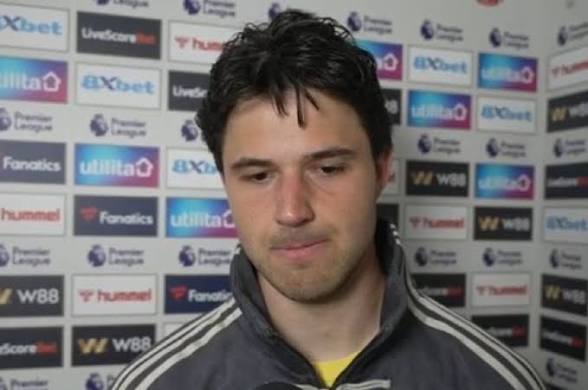
Senne Lammens has spoken out in remarkably candid fashion. The Manchester United goalkeeper has reportedly expressed clear frustration at playing behind one particular defender, admitting he felt uncomfortable with the player in front of him during yesterday’s match. Lammens claims the defender’s poor positioning and repeated mistakes left him exposed to a high volume of shots, making his job significantly harder and directly contributing to the goals United conceded. While careful to avoid sounding unprofessional, the keeper has made no attempt to hide his unhappiness with the individual performance that unfolded in front of him. 😡
“I don’t want to sound unprofessional, but the truth is that I’m not always comfortable whenever I’m playing alongside him. He really exposed me to a lot of shots yesterday!” Lammens is reported to have said, delivering one of the most direct public critiques a goalkeeper has levelled at a defensive teammate in recent times.
The comments lift the lid on another layer of tension within a United squad already dealing with heavy criticism and internal friction.
Exposed and Uncomfortable
According to those familiar with Lammens’ assessment, the issue was not a single isolated error but a pattern of positioning and decision-making problems that repeatedly allowed Brentford (or the opposition) to get shots away from dangerous areas. From the goalkeeper’s perspective, the defensive line in front of him failed to close space, track runners or deal with the first ball effectively enough, leaving him facing a higher volume of efforts than should have been necessary.
Goalkeepers rely heavily on the structure and discipline of those ahead of them. When that structure breaks down, the No. 1 is left isolated and often unfairly exposed to criticism for goals that originate higher up the pitch. Lammens’ frustration appears rooted in exactly that dynamic. He felt the mistakes in front of him turned manageable situations into repeated tests of his shot-stopping, and he is no longer prepared to absorb that pressure in silence.
The admission that he is “not always comfortable” whenever the defender in question is selected is particularly significant. Comfort and trust are fundamental to a working defensive unit. When the goalkeeper publicly states that those elements are missing, the relationship requires urgent attention.
Repeated Mistakes and the Cost of Exposure
Lammens is understood to have been unhappy with the frequency of the errors. Poor positioning on several occasions allowed attackers to receive the ball in space or attack the box with momentum. Each instance increased the number of shots he had to face and raised the likelihood of goals being conceded. In a match that ended in a heavy defeat, those cumulative problems became impossible to ignore.
The goalkeeper’s comments carefully balance accountability. He has not claimed perfection in his own performance. Instead he has focused on the specific ways in which the defending in front of him made an already difficult afternoon far harder. By highlighting the volume of shots he was forced to deal with, Lammens has shifted part of the post-match scrutiny back onto the defensive unit as a whole.
In elite football, goalkeepers are often the last line of protection and the first to face questions when clean sheets are rare. Lammens’ intervention suggests he believes that scrutiny has been unevenly applied and that the players ahead of him must share greater responsibility for the vulnerability that was exposed.
Dressing-Room Implications
Public criticism of a teammate’s positioning and reliability is rare and almost always indicates that private conversations have failed to produce change. Lammens’ decision to speak in these terms will force the issue into the open. The defender concerned now faces questions about his concentration, positioning and ability to protect the goalkeeper effectively.
Mauricio Pochettino and his staff must manage the fallout carefully. A goalkeeper who feels chronically exposed is unlikely to perform at his best. At the same time, openly airing those frustrations risks deepening divisions within the back line at a moment when unity is already under strain. Clear communication of defensive standards and, if necessary, selection changes will be required to restore confidence.
Other defenders will also take note. The message is that repeated positional errors and a failure to limit shots will not be absorbed quietly by the goalkeeper. Accountability is being demanded from the man who ultimately pays the price for defensive lapses.
Fan and Media Reaction
Manchester United supporters have reacted with a mixture of understanding and concern. Many who watched the match shared the sense that the defence looked vulnerable and that Lammens was often left with too much to do. Hearing the goalkeeper articulate that feeling so directly has validated widespread frustration with the side’s defending.
Others have expressed unease at another public airing of internal dissatisfaction. Coming amid a difficult run of results and previous reports of dressing-room tension, Lammens’ comments add to the impression of a squad struggling for cohesion. The strong language around feeling “exposed” and “not always comfortable” has dominated discussion and ensured the story will remain prominent.
Media coverage has focused on the unusual nature of a goalkeeper openly questioning a defender’s reliability. In a results climate as challenging as United’s current one, such comments intensify the pressure on both the individual and the coaching staff to address the defensive issues urgently.
Looking Ahead: Trust Must Be Rebuilt
Senne Lammens has drawn a clear boundary. He does not feel consistently comfortable when a particular defender is selected in front of him. He believes poor positioning and repeated mistakes left him exposed to far too many shots. And he is no longer prepared to stay silent about the impact those errors had on his ability to do his job.
The heavy defeat has provided the backdrop, but the underlying issue appears to be longer-term. Trust between goalkeeper and defence is fundamental. Right now that trust is publicly strained.
For the defender in question, the path forward requires immediate improvement in the fundamentals of positioning and concentration. For the coaching staff, the priority is restoring a defensive structure that protects the goalkeeper rather than leaving him isolated. For the squad as a whole, another public expression of frustration serves as a reminder that patience is wearing thin.
Lammens has spoken carefully but firmly. The discomfort is real. The exposure was too great. And the demand for better defending from those in front of him has been placed firmly on the record.
THE GOALKEEPER HAS SPOKEN. THE DEFENDER IS UNDER SCRUTINY. TRUST IN THE BACK LINE IS UNDER PRESSURE. ⚡