
Liverpool’s controversial 1–0 defeat to Arsenal at Anfield has reopened one of football’s biggest arguments: is VAR actually delivering justice, or is it creating even more confusion?
Two penalty appeals during the encounter have become major talking points, with Liverpool supporters questioning why neither incident resulted in a spot kick.
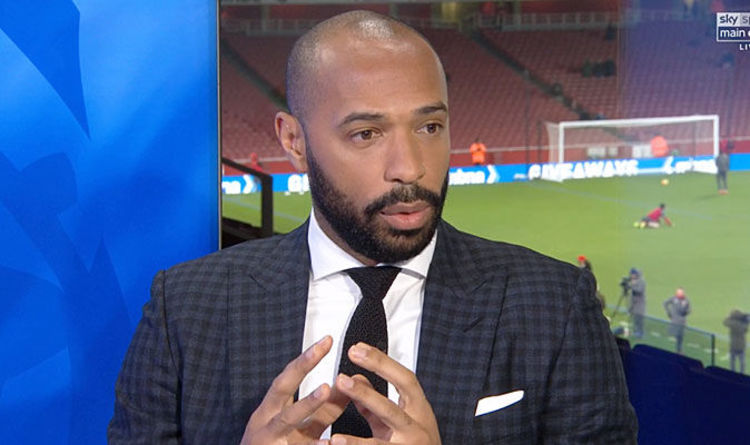
The controversy has become particularly interesting because Thierry Henry, one of Arsenal’s most recognisable former players, is frequently involved in discussions surrounding major Premier League decisions.
A viral statement circulating online claims Henry was furious with VAR and believed Liverpool had been robbed twice, despite his connection with Arsenal.
However, there is no reliable confirmation that Henry delivered the quoted outburst or demanded that the match be replayed.
That has not stopped the debate from growing.
THE FIRST INCIDENT THAT LEFT LIVERPOOL FURIOUS
The first major controversy involved Alexander Isak and Arsenal defender Jurriën Timber.
Liverpool were attempting to create danger inside Arsenal’s penalty area when Isak appeared to have his shirt pulled by Timber.
The Swedish striker struggled to reach the ball, and Liverpool’s players immediately appealed for a penalty.
The referee rejected their protests, while VAR reviewed the incident without recommending an intervention.
For Liverpool supporters, this was difficult to understand.
Their argument was straightforward: if a defender pulls an opponent’s shirt and prevents him from challenging for the ball, why should that not be punished?
Shirt-pulling can constitute an offence under football’s Laws of the Game, but officials must assess the severity and impact of the contact.
That distinction is precisely what has fuelled the argument.
THE SECOND PENALTY APPEAL ADDS TO THE FRUSTRATION
The second incident involved Cody Gakpo and Christos Tzolis.
Gakpo went to ground after contact with the Arsenal player inside the penalty area, prompting another appeal from Liverpool.
Once again, the referee allowed play to continue.
VAR subsequently checked the incident but did not overturn the original decision.
The two rejected appeals created an uncomfortable situation for Liverpool.
They were chasing a goal against a well-organised Arsenal defence, and every opportunity to get back into the contest mattered.
For supporters, seeing two penalty appeals rejected in one match naturally raised questions about consistency.
However, the two incidents must be assessed separately. Contact alone does not automatically constitute a penalty, and officials must determine whether an opponent committed a punishable offence.
WHY THE THIERRY HENRY ANGLE HAS ATTRACTED ATTENTION
Henry’s alleged involvement has made the controversy even more appealing to football supporters.
As a former Arsenal striker, any genuine criticism of Arsenal’s opponents’ treatment by officials would attract considerable attention.
The viral quotation portrays Henry as someone willing to criticise a decision even when doing so might benefit his former club.
But without an authentic recording, interview or reliable report, the statement should not be treated as something he definitely said.
What is beyond dispute is that the two penalty appeals have generated a serious discussion about VAR and the standard of Premier League officiating.
LIVERPOOL WERE ALREADY FACING AN UPHILL BATTLE
The controversy cannot be separated from the events of the match.
Arsenal took the lead through Kai Havertz in the 16th minute after Declan Rice delivered a dangerous ball into the penalty area.
Liverpool attempted to respond, with Florian Wirtz striking the crossbar and the home side continuing to search for an equaliser.
But Arsenal defended resolutely and protected their advantage until the final whistle.
The 1–0 result was a major victory for Arsenal and a frustrating afternoon for Iraola’s Liverpool side.
Had either penalty appeal resulted in a spot kick, the match could have developed very differently.
That possibility is what makes the decisions so difficult for Liverpool supporters to forget.
SHOULD VAR BE SCRAPPED?
The bigger question is whether the technology is achieving what it was introduced to accomplish.
VAR was designed to correct clear and obvious mistakes involving goals, penalties, direct red cards and mistaken identity.
It was never intended to eliminate every disagreement or guarantee that every decision would satisfy supporters.
Nevertheless, when two major penalty appeals in the same match generate so much debate, questions about consistency and transparency are inevitable.
The Premier League and its officials must maintain public confidence in the system.
Supporters want to understand why decisions are made, particularly when important incidents are reviewed and the original decisions remain unchanged.
SHOULD LIVERPOOL DEMAND ANSWERS?
There is no established basis for demanding a replay simply because two penalty appeals were rejected.
Football matches are not normally replayed because of disputed refereeing decisions.
However, Liverpool supporters can reasonably demand clarity about how both incidents were assessed.
For Iraola, the priority will be ensuring that his players respond positively rather than allowing the controversy to dominate their season.
For Arsenal, the three points are already secured.
But the debate surrounding those two penalty appeals is unlikely to disappear quickly.
And until the incidents receive convincing explanations, Liverpool supporters will continue asking the same question.