
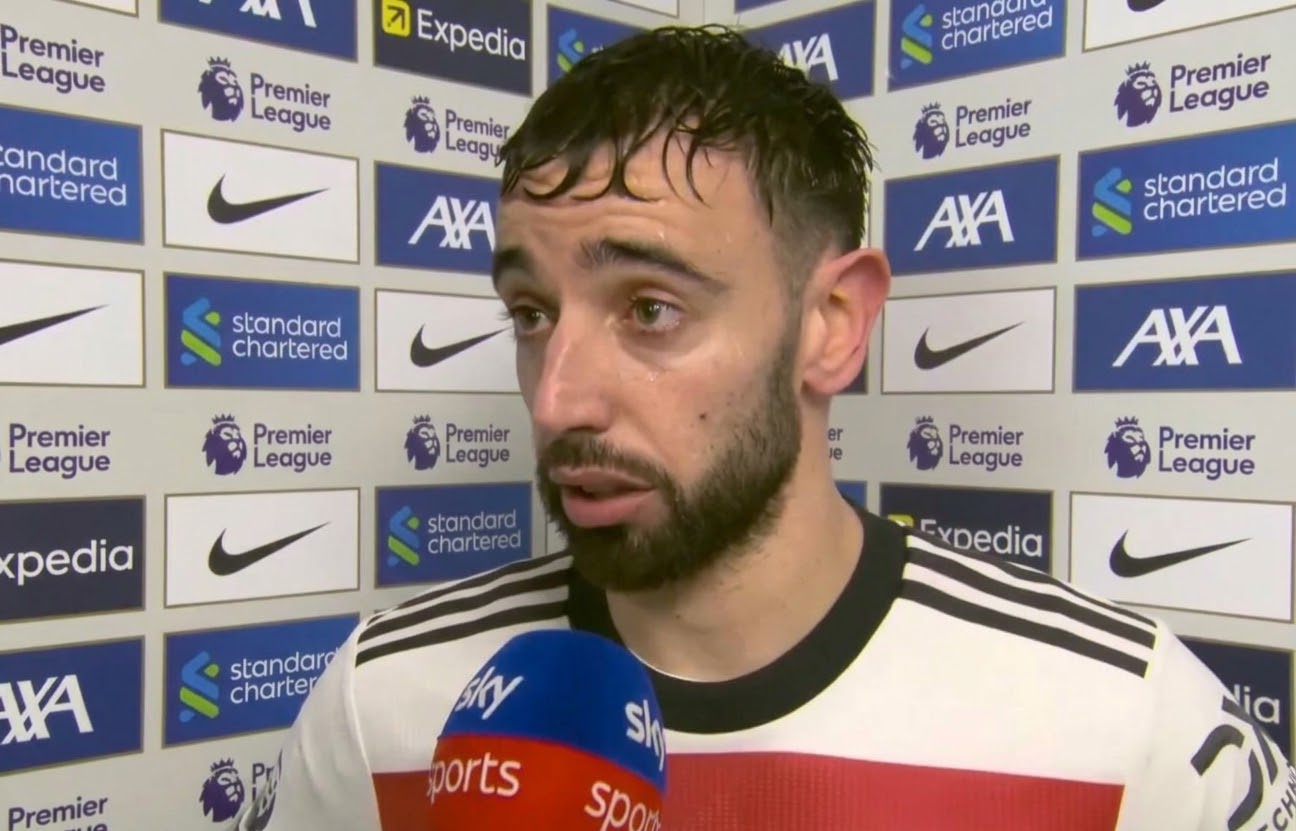
Even in victory, the tension inside Manchester United refuses to ease. Bruno Fernandes has reportedly launched a scathing attack on one of his teammates following today’s win, admitting he is fed up with playing alongside the player after watching him repeatedly waste crucial chances. The United captain says the individual’s poor finishing made his own job unnecessarily difficult and has gone as far as stating that, based on what he witnessed, the player should not be anywhere near the squad. Fernandes made clear he cannot easily forgive the squandered opportunities that could have changed the complexion of the match. 😳
“I just dislike playing with him! He makes my job harder, and after what I saw today, he is not fit to be in this squad!” Fernandes is reported to have said, underlining a level of frustration that has boiled over into public view.
The comments are extraordinary for their directness. Captains often protect teammates in public even when privately disappointed. Fernandes has chosen the opposite path, placing the player’s finishing and overall contribution under the harshest possible light despite the positive result.
Chances Wasted and Frustration Unleashed
According to those familiar with the post-match mood, several clear opportunities fell to the teammate in question during the contest. In Fernandes’ view, those moments were not merely missed — they were carelessly discarded in a manner that undermined the team’s control and forced others to compensate. As the primary creator and tempo-setter, the captain felt the cost of those failures more acutely than most.
The repeated nature of the problem appears to have been the breaking point. Fernandes is understood to have grown increasingly irritated as the match progressed, watching promising situations break down through poor decision-making or clinical shortcomings in front of goal. By full-time the accumulated frustration had reached a level he was no longer prepared to contain.
His reported declaration that he “dislikes playing with him” removes any diplomatic filter. This is not a technical critique delivered with professional detachment. It is a personal expression of dissatisfaction with a teammate’s output and its impact on those around him.
“He Makes My Job Harder”
The claim that the player makes Fernandes’ job harder cuts to the heart of creative partnership. Midfielders and attackers rely on each other to convert control into goals. When the final action repeatedly fails, the value of the preceding work is diminished. Fernandes, who shoulders significant creative responsibility, clearly feels that burden has been increased by the teammate’s inefficiency.
In a results-driven environment, such friction is dangerous. When a captain begins to view a colleague as an obstacle rather than an asset, the collective dynamic suffers. The public nature of the comments only intensifies that risk. Other players will have heard or read the assessment. The dressing room must now navigate the awkwardness of a senior figure openly questioning a teammate’s right to be in the squad.
Not Fit for the Squad
The most severe element of Fernandes’ reported outburst is the assertion that the player is “not fit to be in this squad” based on the day’s evidence. That is a devastating judgement from the club captain. It moves beyond criticism of a single performance and questions the individual’s basic suitability for Manchester United.
Such language leaves little room for reconciliation without significant change. The player on the receiving end faces an immediate test of character and form. Responding with improved performances is the only realistic path back to acceptance. Anything less will only reinforce the captain’s verdict in the eyes of supporters and, potentially, the coaching staff.
Fernandes’ refusal to forgive the wasted chances adds an emotional edge. Captains are paid to demand standards. When those standards are perceived to be repeatedly ignored in decisive moments, patience evaporates.
Dressing-Room Fallout
The timing of the comments — after a victory — makes them even more notable. Wins usually provide cover for individual shortcomings and allow internal issues to remain private. By choosing this moment to speak so forcefully, Fernandes has signalled that the problem is too significant to overlook even when the result is favourable.
Mauricio Pochettino and his staff now face a delicate management task. Public rifts between senior players require careful handling. Supporting the captain’s demand for higher standards risks alienating the criticised player. Protecting the individual risks undermining the captain’s authority. The ideal resolution involves private conversations, clear expectations, and rapid improvement on the pitch.
Other members of the squad will be watching closely. The episode sets a tone about how failure in front of goal is viewed and how openly such failures can be challenged. In a group already navigating pressure and scrutiny, additional internal tension is an unwelcome complication.
Fan and Media Reaction
Manchester United supporters have reacted with a mixture of agreement and concern. Many have shared Fernandes’ frustration with wasteful finishing and welcomed the captain’s refusal to soft-pedal the issue. In their view, high standards must be enforced from within if the team is to progress.
Others worry that airing such strong personal criticism publicly damages unity at a time when collective resilience is required. The strong language — “dislike playing with him” and “not fit to be in this squad” — has dominated discussion and ensured the story will linger beyond the usual post-match cycle.
Media coverage has focused on the rarity of a captain turning on a teammate so directly after a win. The quotes have been widely circulated and analysed as evidence of deeper frustrations within the squad.
Looking Ahead: Standards and Consequences
Bruno Fernandes has drawn a stark line. He is fed up with playing alongside the teammate in question. He believes the player’s poor finishing makes his own job harder. He cannot easily forgive the chances that were thrown away. And after what he saw, he does not consider the individual fit for the Manchester United squad.
The victory provides only limited protection. The captain’s words have ensured that the focus remains on internal standards rather than the result alone. For the player at the centre of the storm, the path forward is clear but demanding: improve dramatically or face the consequences of the captain’s loss of faith.
For the squad as a whole, the episode is a reminder that results alone do not guarantee harmony. Accountability, clinical edge and mutual trust remain essential. Right now, one of those pillars has been publicly challenged by the most influential player in the team.
Fernandes has spoken with brutal honesty. The dislike is out in the open. The demand for better has been made. And the dressing room must now deal with the fallout.
THE CAPTAIN HAS EXPLODED. THE TEAMMATE IS UNDER FIRE. UNITY IS BEING TESTED